
It was a short week at work and school for us since Thanksgiving was on Thursday!
Our original plans had us departing on Wednesday afternoon to fly to Albania and begin a road trip through several Balkan countries. Unfortunately, on Tuesday we found out that our flight had been rescheduled for Thursday night—not cancelled, just moved—which definitely didn’t fit our itinerary, since we had planned to stay in a different place each night. After playing around with the rescheduling options, we decided to just take the refund for the flights and plan a new local weekend instead. Luckily, only one hotel was non-refundable, and at just €87, we weren’t too upset about the loss.
They had been advertising Popeye’s Thanksgiving turkeys on base for weeks, and Ryan mentioned that he’d like to try one. Since we’re rarely home for Thanksgiving, that didn’t seem very likely—but with our trip canceled, it suddenly became possible. Luckily, someone else had canceled their order, so Matt was able to pick up the last turkey on Tuesday afternoon. After talking with some friends, we decided to do a joint Thanksgiving with their turkey and ours.
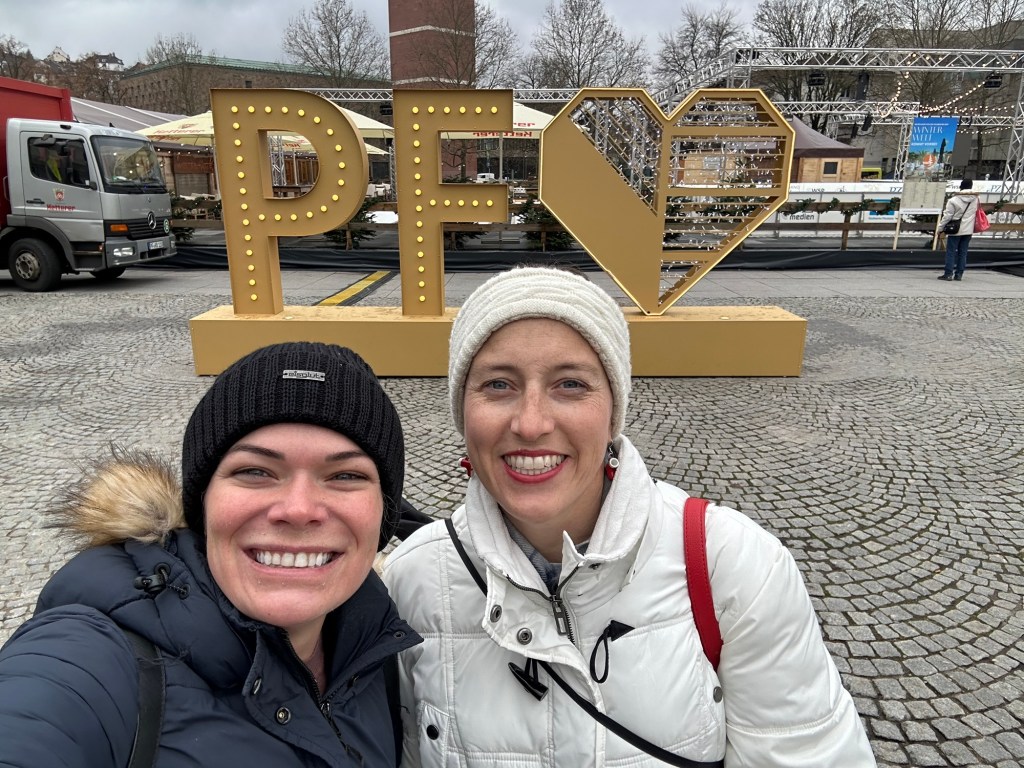
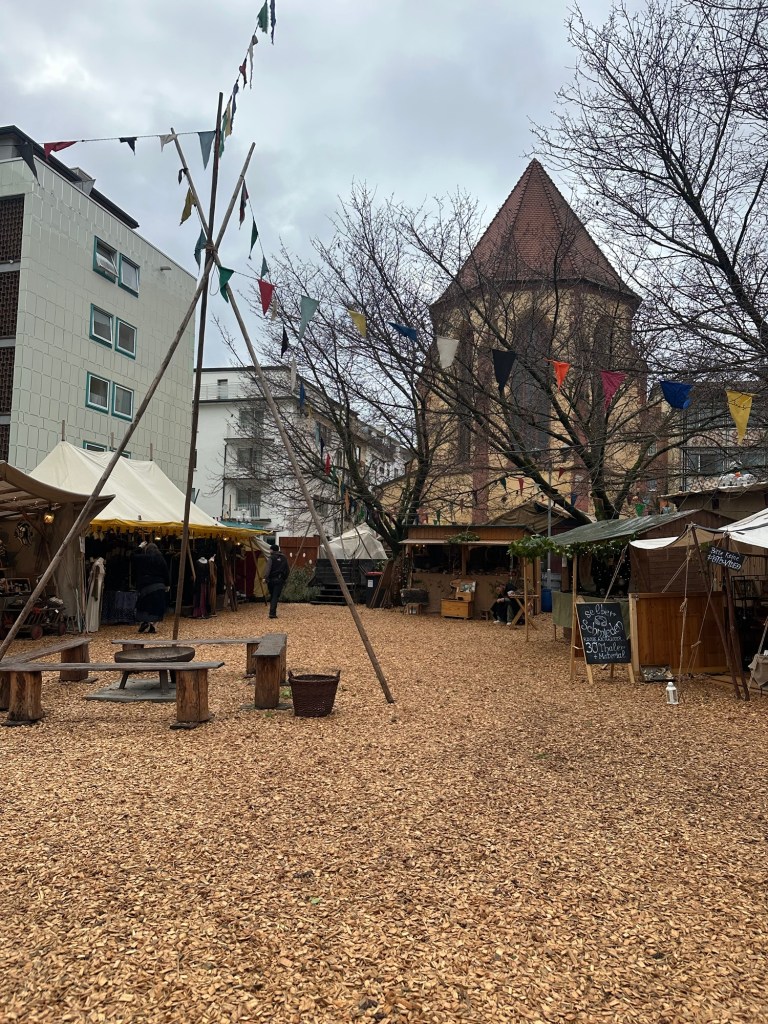
Wednesday was a half-day for me, so instead of racing to the airport, a friend and I decided to check out some local Christmas markets. We started in Pforzheim, about 30 minutes east of Stuttgart, where they have both a regular Christmas market and a medieval market.
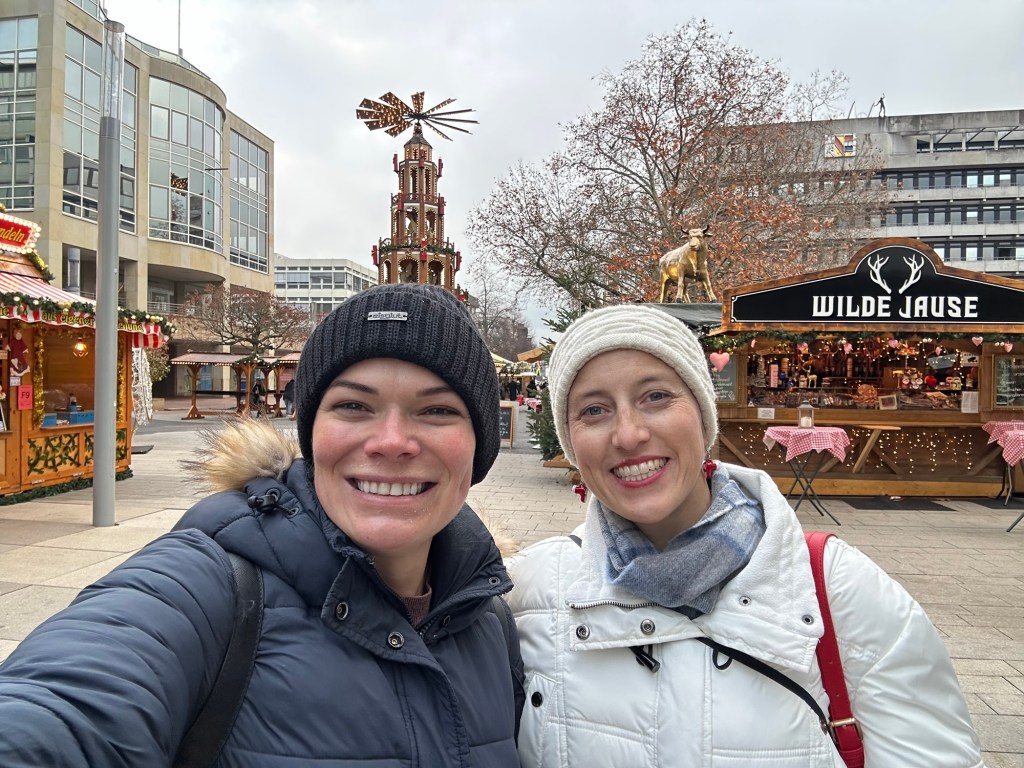
Both markets were small, but we still found several mugs and plenty of vendors to choose from for Langos at lunchtime.
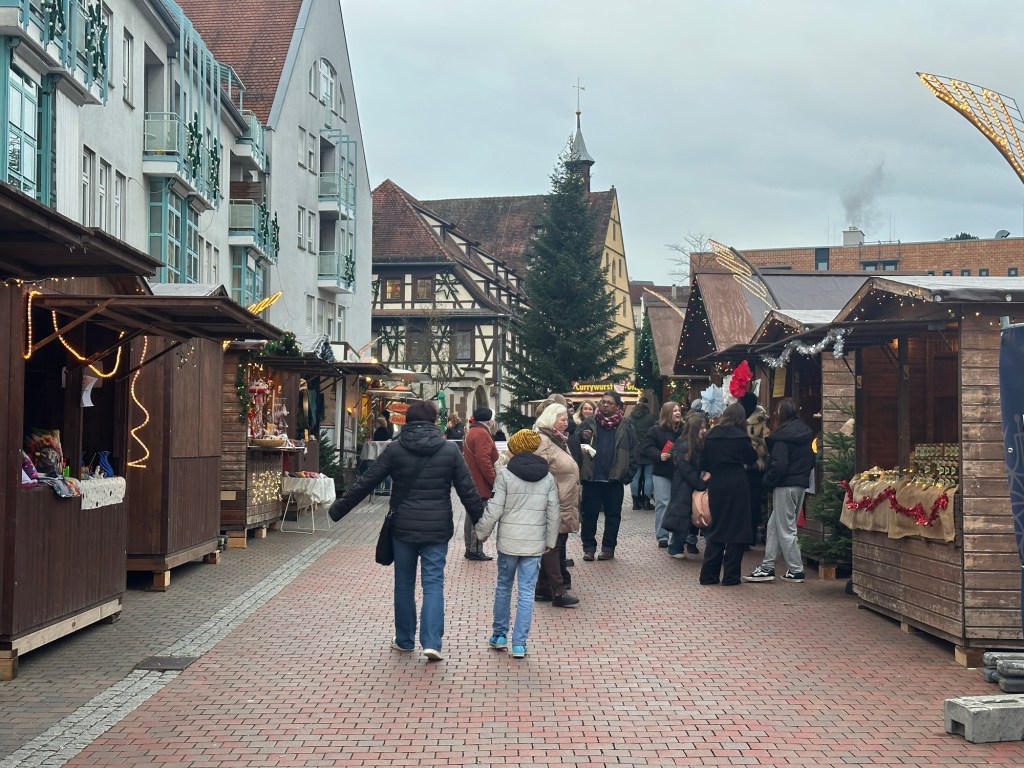
It was still early when we left Pforzheim, so we decided to check out another local market in a nearby town called Mühlacker. It’s just a small, weekend community market, so we expected it to be tiny, but we found the cutest little stalls, mostly run by school clubs selling Christmas gifts. We also found some super cute mugs!
Sadly, our stop in Mühlacker wasn’t without incident—I got snapped by a speeding camera and also ended up with a parking ticket. I’ve gone months without a ticket, so I guess my good luck has run out!
Thursday was Thanksgiving! Matt got up early to cook our turkey and a few side dishes, while I headed to the mall to get my nails done and do some shopping. Since it wasn’t a holiday in Germany, everything was open—perfect for running errands. I ran into so many other Americans there; it seems we all had the same idea.
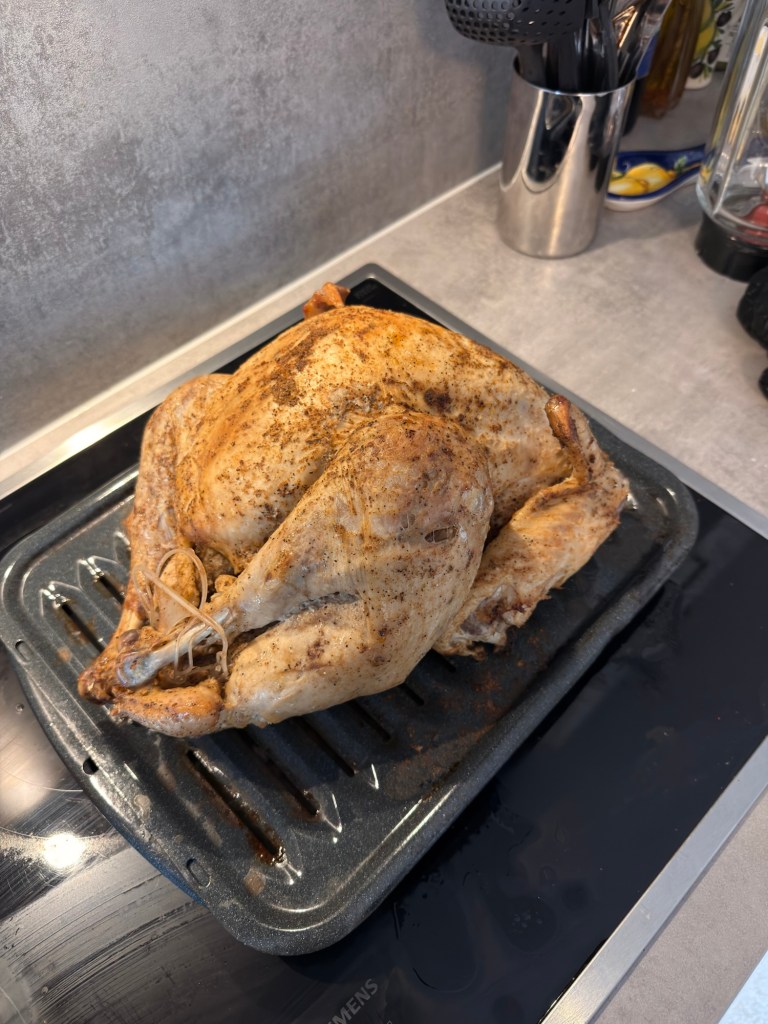
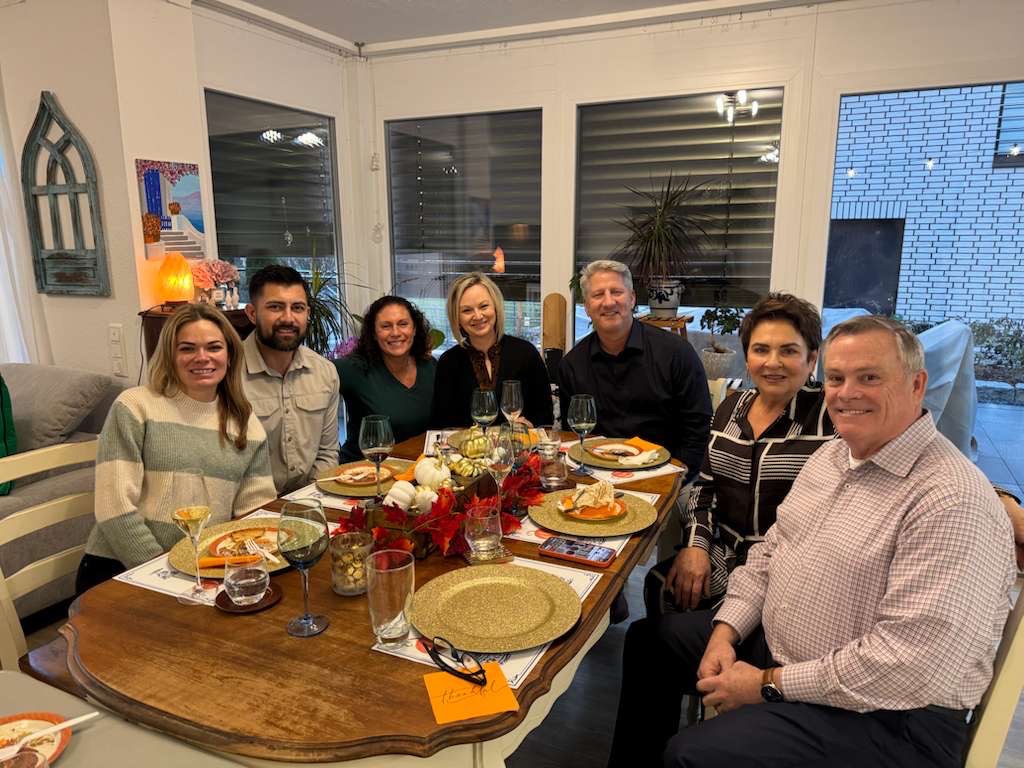
In the afternoon, we went to our neighbors’ house, who graciously welcomed us for Thanksgiving, and we ended the evening with some card games.
On Friday, we got up semi-early for our new weekend plan: visiting some Christmas markets we hadn’t seen before. I mapped out a route that would take us to several new Bavarian cities and even into a German state new to us—Thuringia.
We started in Bamberg, a picturesque Bavarian city known for its well-preserved medieval architecture and charming old town, which was largely spared from destruction during World War II. Built across seven hills and intersected by the Regnitz River, the city boasts a uniquely scenic atmosphere, highlighted by its iconic Town Hall perched in the middle of the river.

We parked just below the Marktplatz and immediately spotted the giant Christmas pyramid as soon as we emerged. To my delight, we found they had two great mugs; one boot, and one pyramid! Matt and I each enjoyed a glühwein before heading off in search of food. Stalls stretched from the Christmas market all the way to the Obere Brücke, which spans the Regnitz River.
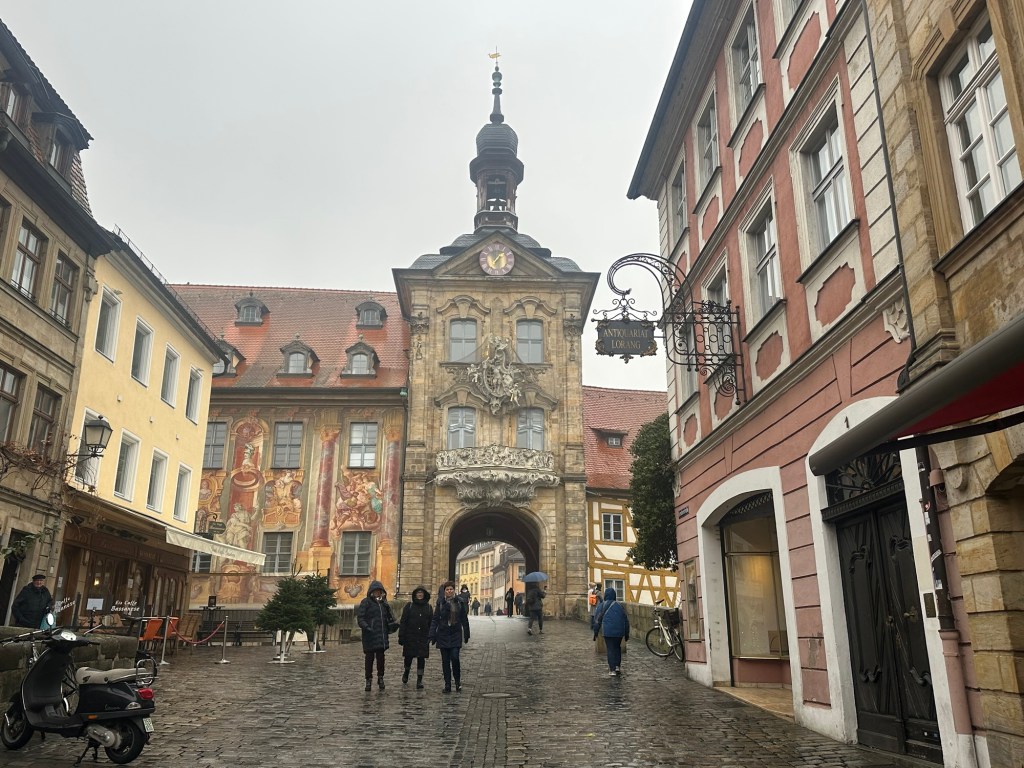
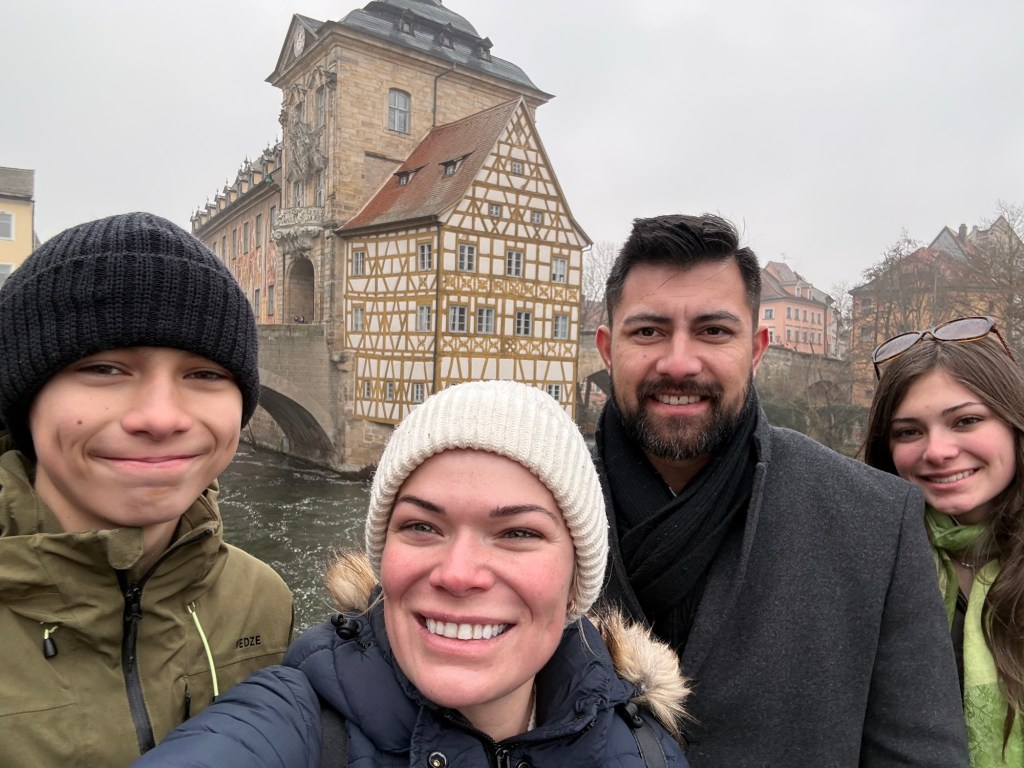
There, on a tiny island in the middle of the river, stands Bamberg’s Altes Rathaus, or Old City Hall. The building is half stucco and half timber-framed, with the timbered section precariously perched on a ledge over the river, while the stuccoed side is adorned with colorful frescoes. We admired it from every angle before making our way back to the car.

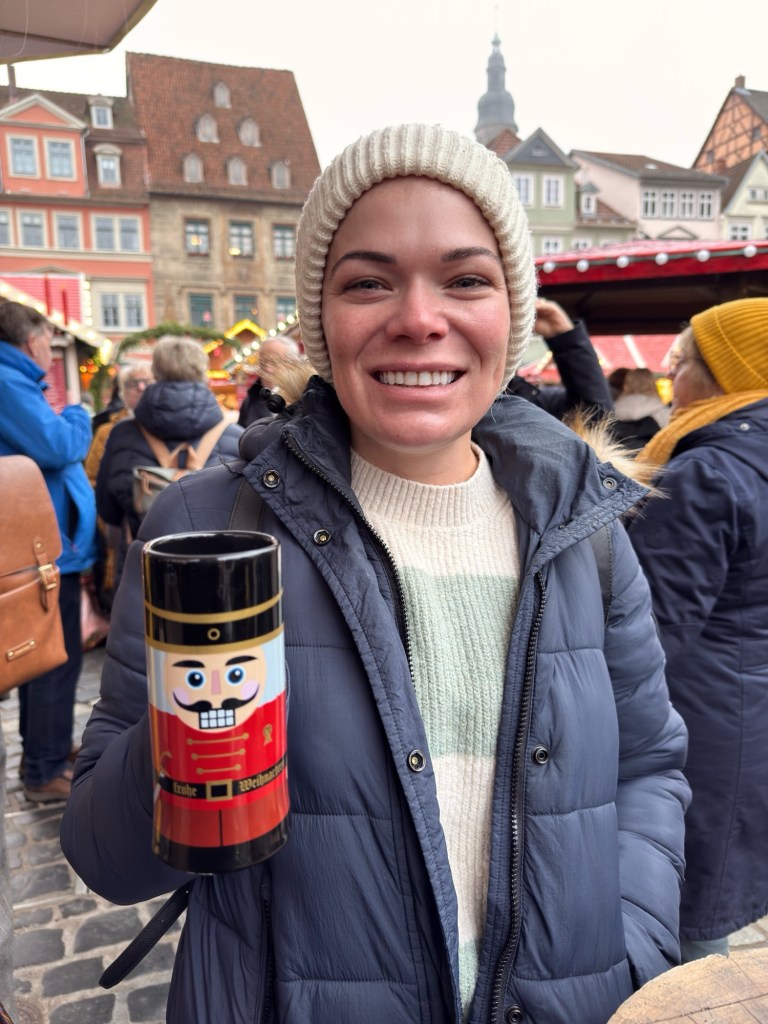
Next, we visited Coburg. It wasn’t originally on my list, but I had seen online that they had the rare Nutcracker mugs this year, so it quickly made the itinerary.
Coburg is a historic town in northern Bavaria, known for its elegant Renaissance and Baroque architecture. Its standout landmarks include the Veste Coburg fortress and the picturesque cobblestone streets of the old town. The town is also famous as the birthplace of Prince Albert, who later married Queen Victoria of England, a connection evident in street names like Victoria Straße and squares such as Albert Platz.
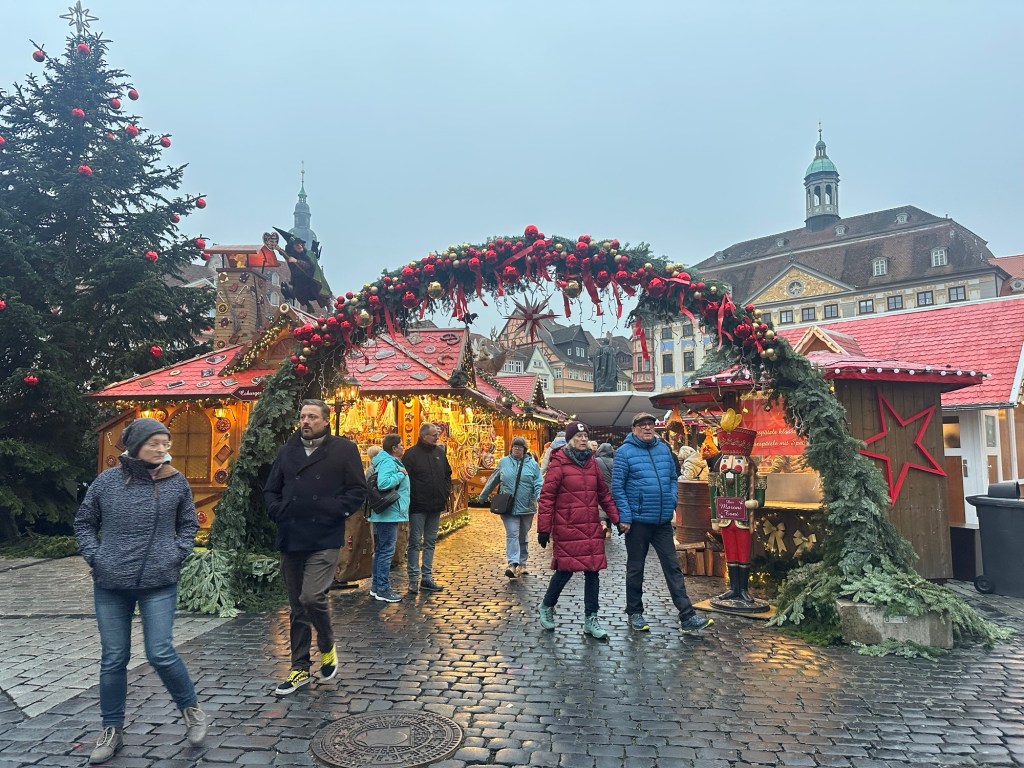
The market was small and we found the Nutcrackers quite quickly along with several other cute mugs. The mug deposits were only €3 here so we got four drinks and kept all the mugs!
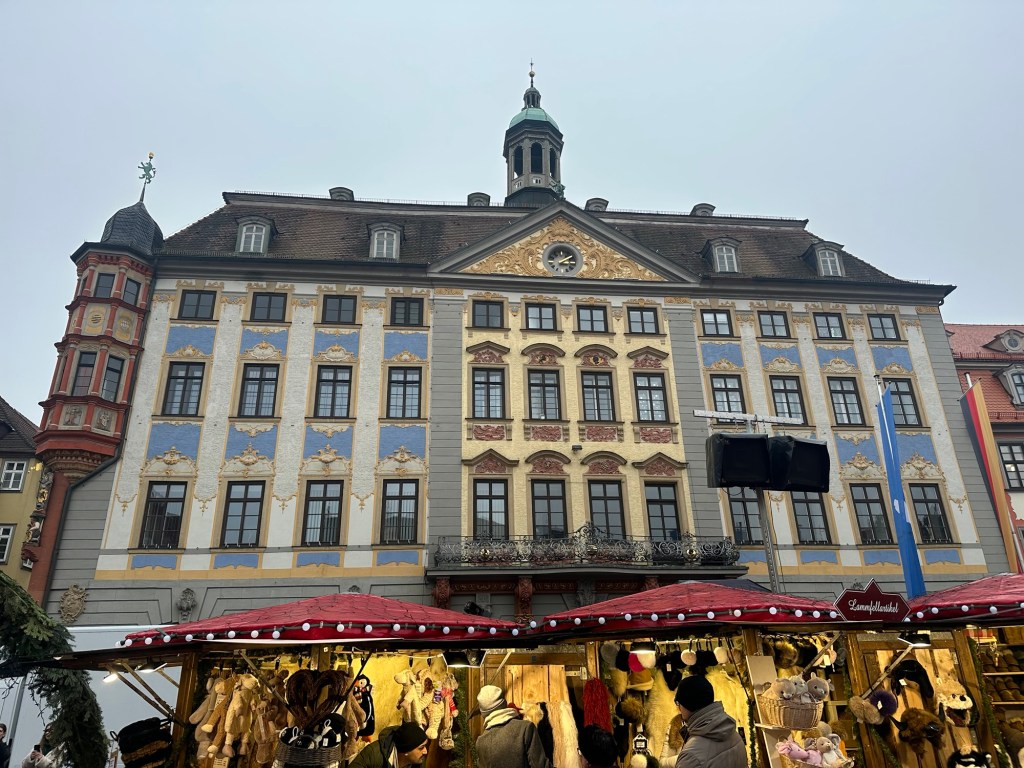
We had already had lunch in Bamberg, so here we opted for snacks of candy and chocolate covered fruit. The market was overall very small so it didn’t take long for us to see it all and we were back in the car.
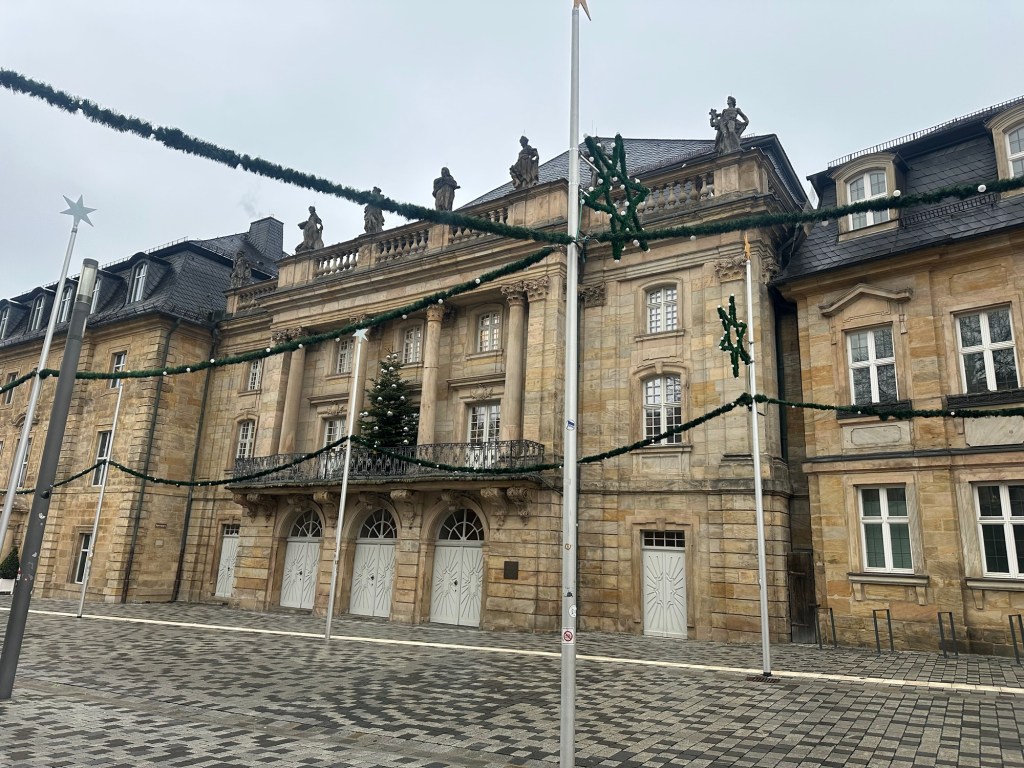
Finally, we arrived in Bayreuth. Bayreuth is a Bavarian city renowned for its rich musical heritage, particularly as the home of the annual Richard Wagner Festival. The city features elegant 18th-century architecture, including the Margravial Opera House, a UNESCO World Heritage site.
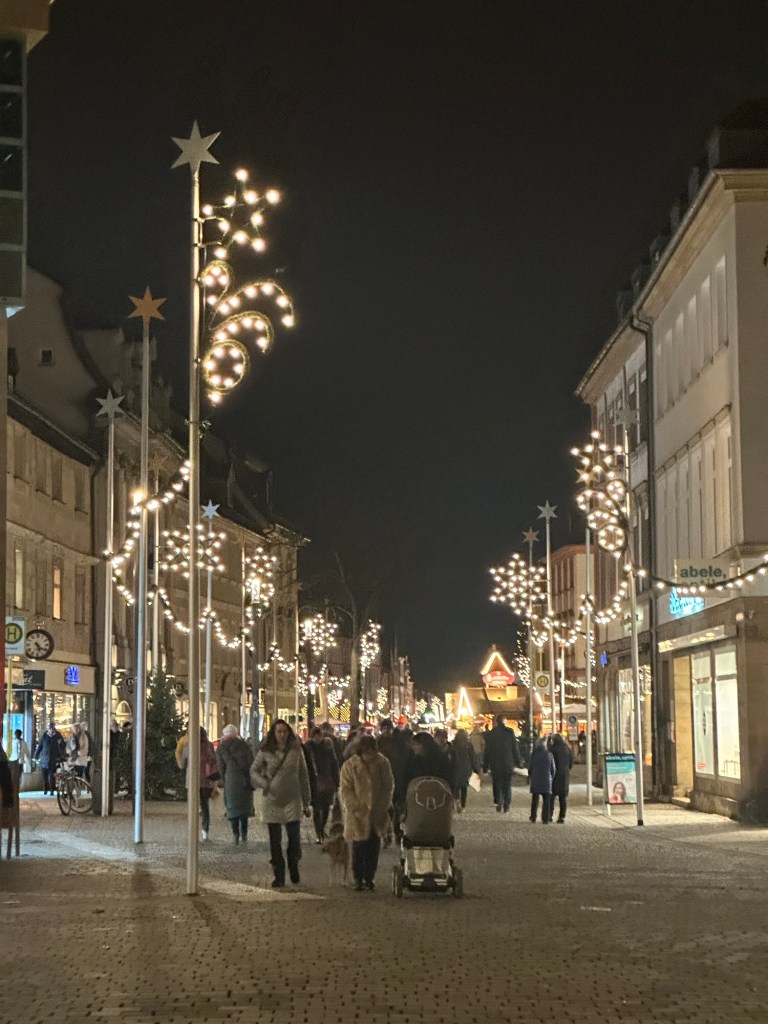
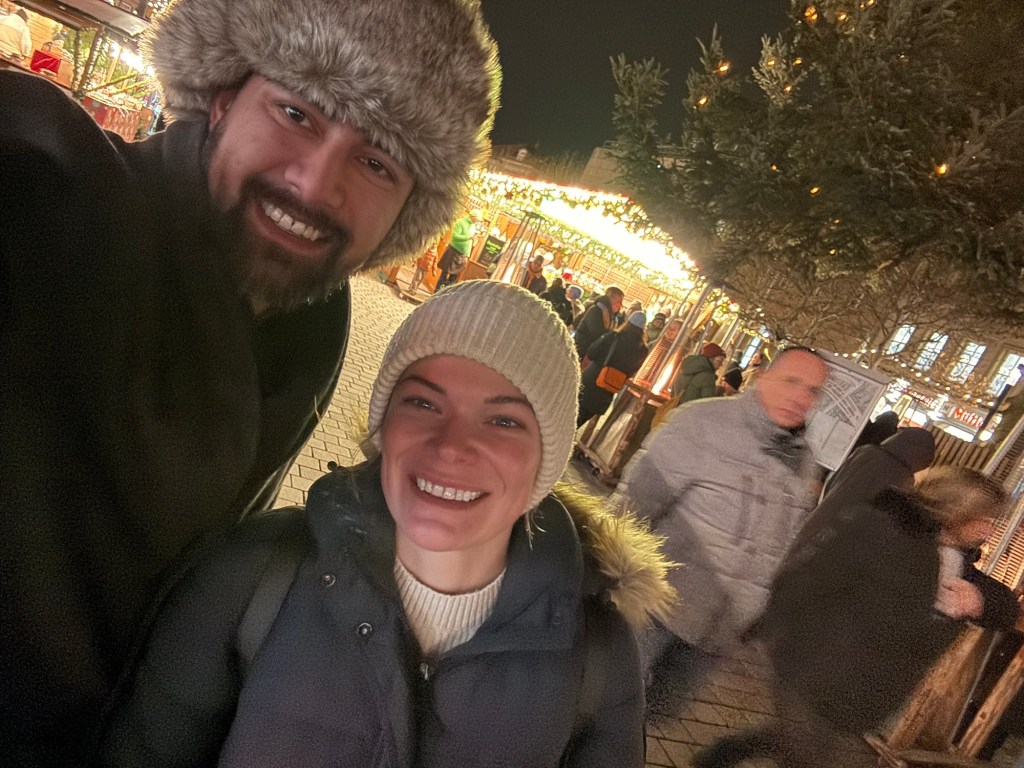
The kids were tired of Christmas markets, so they stayed at the hotel while Matt and I went to the market for dinner and a glüwein.
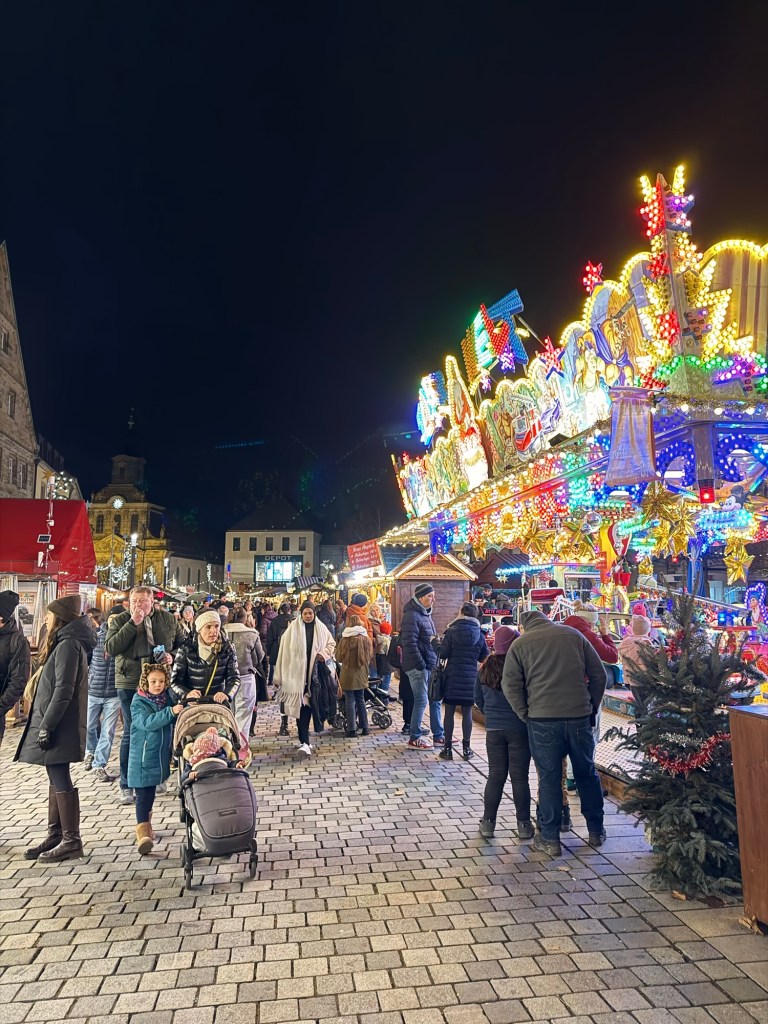
When we got back to the hotel, we ordered sushi to the hotel room and watched Christmas movies—it was a fun day!
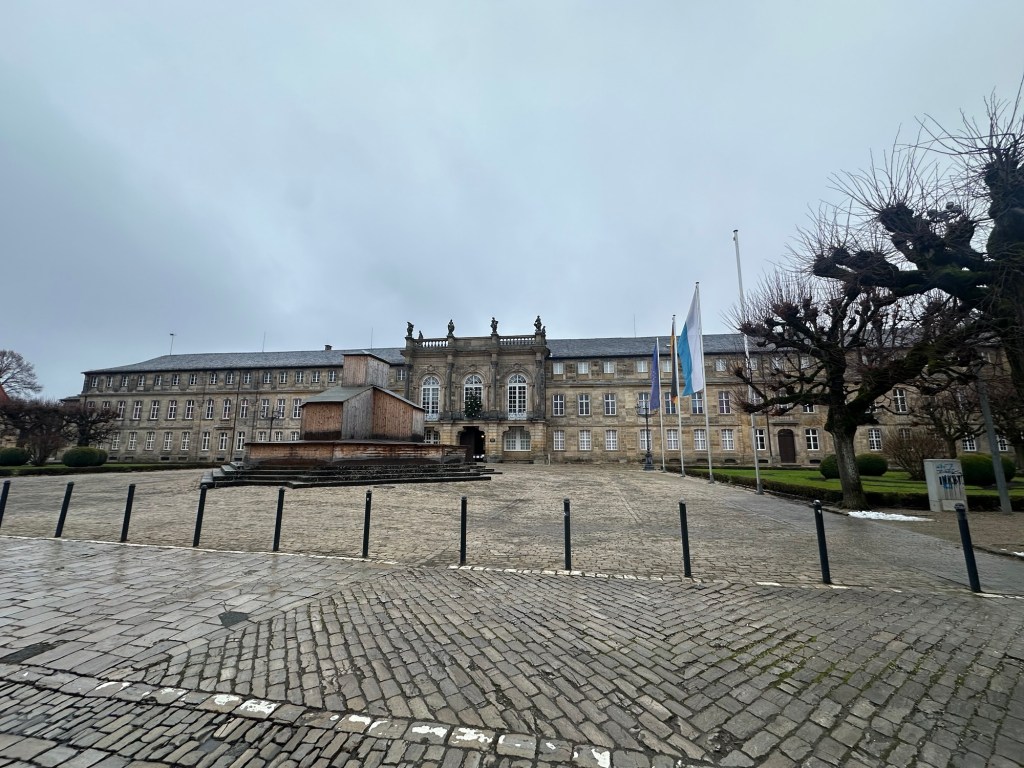
On Saturday, we were up early again, first to take a short driving tour of Bayreuth. Since it had been dark when we arrived the day before, we wanted to see some of the sights in daylight. There is so much to see in Bayreuth that I would love to return for another visit. The Margarvial Opera House and the Palace were not open by the time we left town but I will definitely be back to see them.
We continued our trip to Jena, our first city stop in the German state of Thuringia. Jena is a vibrant university city in Thuringia, Germany, known for its strong academic and scientific community. The city features a mix of historic architecture, including Gothic and Baroque buildings, alongside stark modernist structures from the Cold War era, when it was part of East Germany. The first thing we noticed was the loads of cold-war era apartment buildings and TV tower.
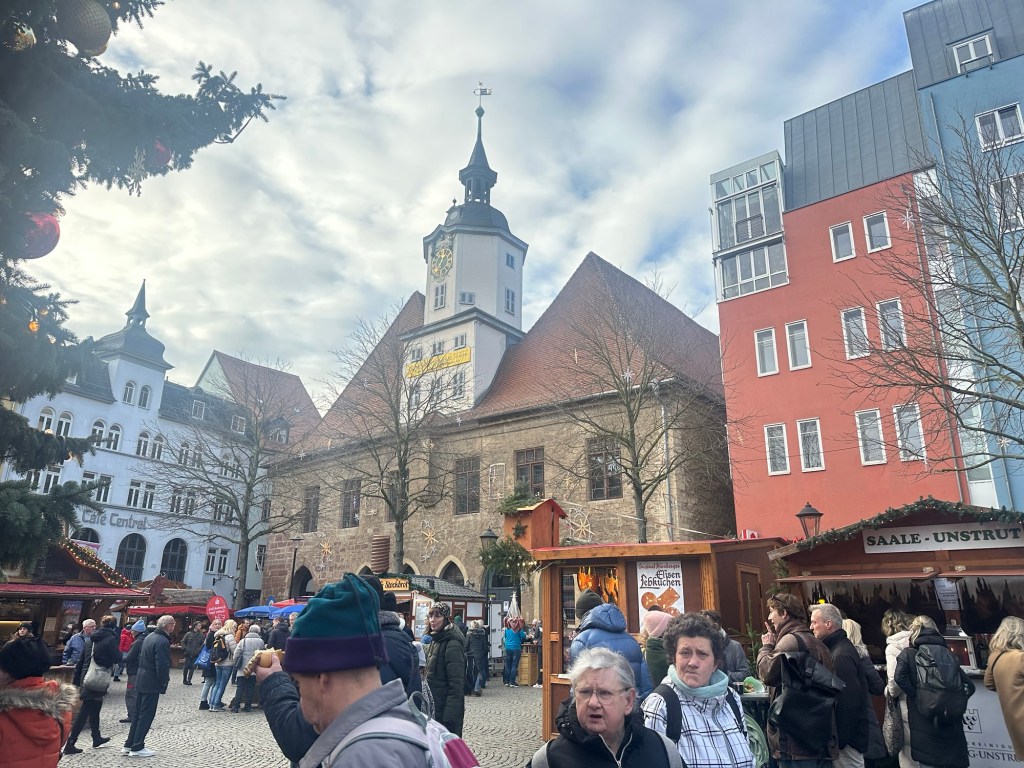
Most of Jena’s downtown was spared significant damage in World War II, so much of it remains intact, though it has a somewhat boxy, Cold War-era vibe.
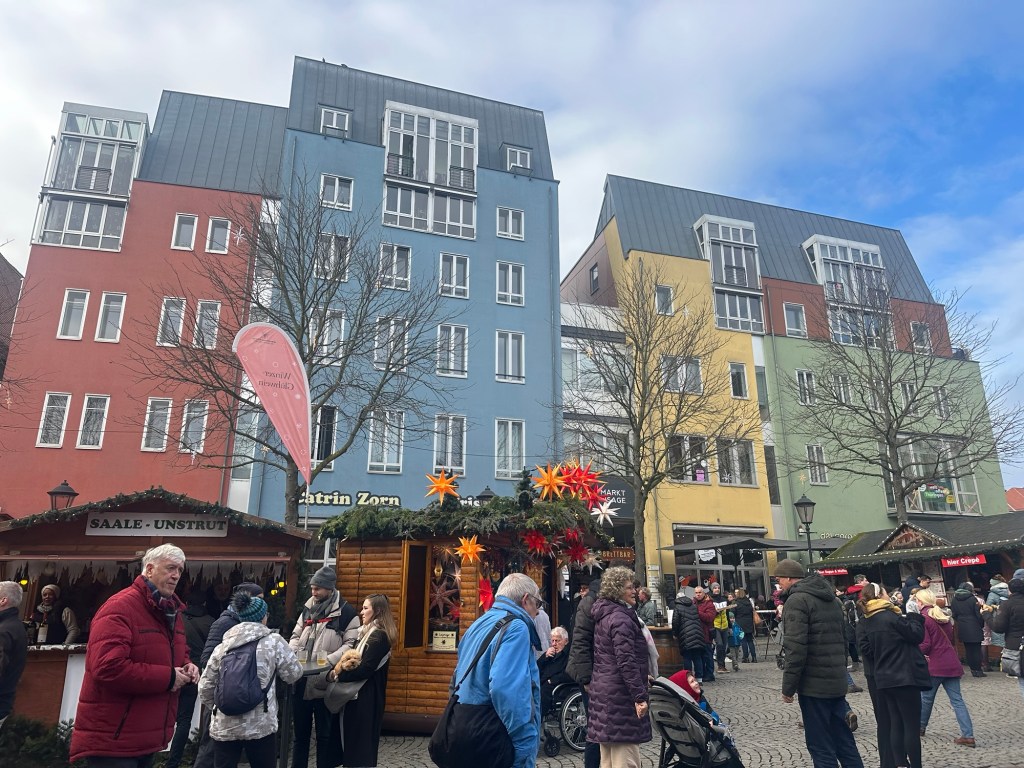
We had stopped at McDonald’s for breakfast just an hour before arriving, but we still managed to enjoy some Langos and glühwein. We even did a bit of shopping and picked up a new Christmas star before continuing on our way. Unfortunately, on the way out of Jena, I was caught by another speed camera—making it two in two days. Ugh!
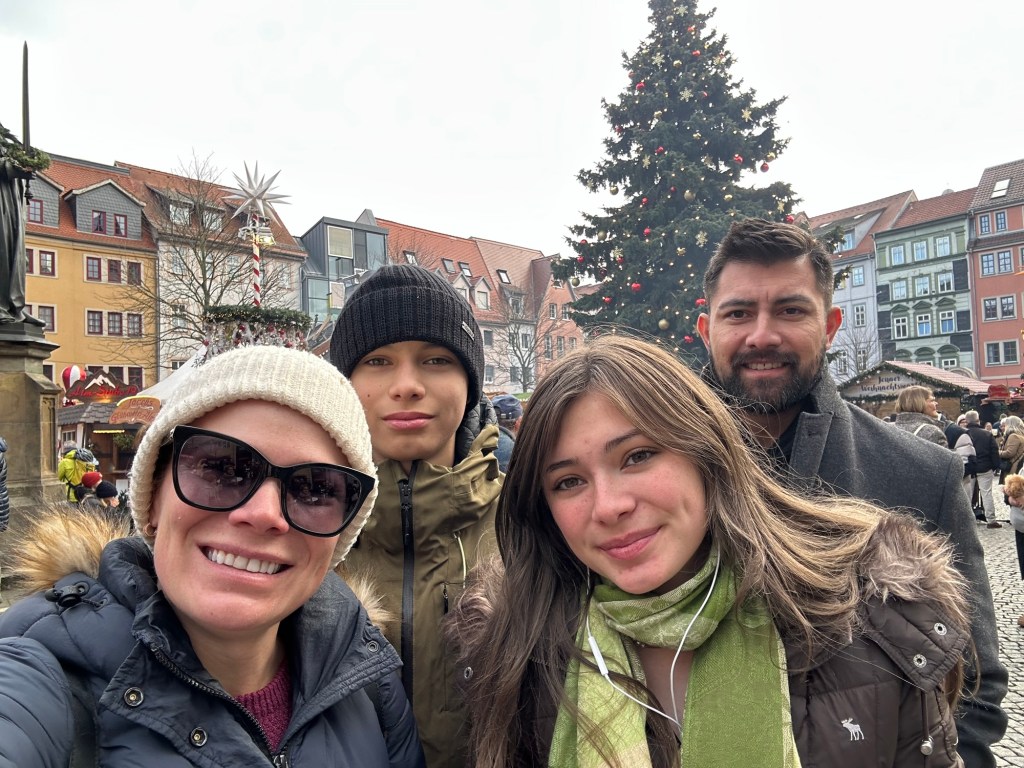
Next was Weimar. Weimar is a culturally rich city in Thuringia, Germany, celebrated for its pivotal role in German literature, philosophy, and the arts. (Yes, I did look that up on the internet). It is home to stunning classical architecture, including grand university buildings, and is famously associated with figures like Goethe, Schiller, and the founders of the Bauhaus movement.
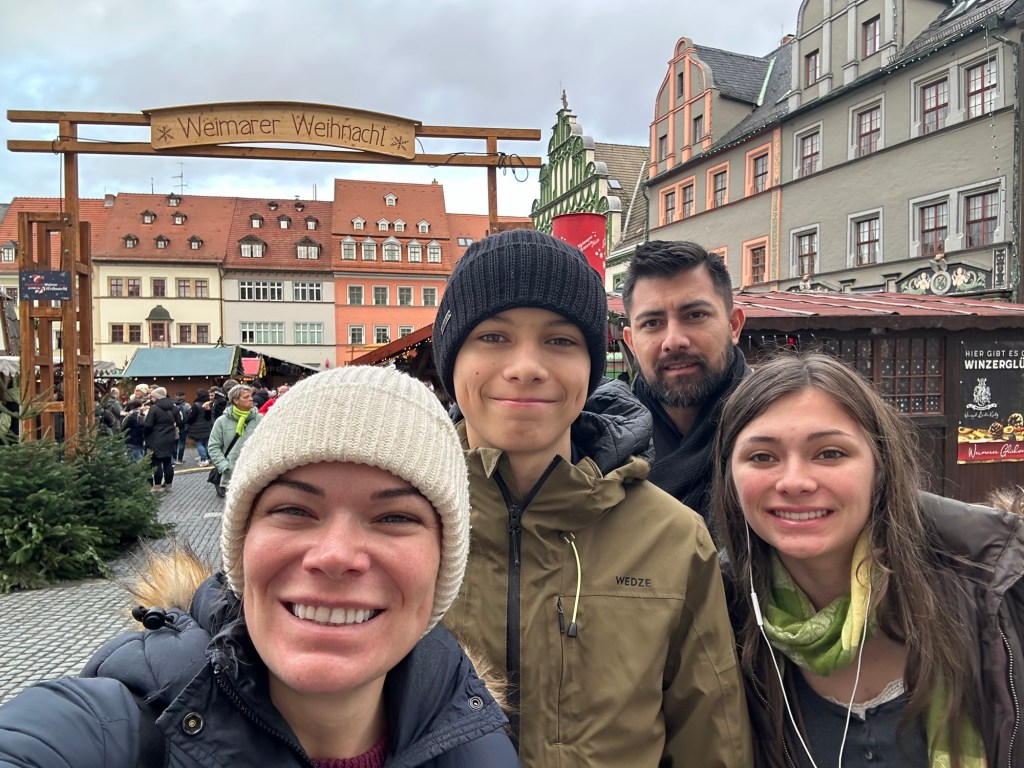
We were lucky to find street parking just outside the market! The market itself was small, so we each grabbed a drink, wandered around the charming stalls, and then took a short stroll through the town.
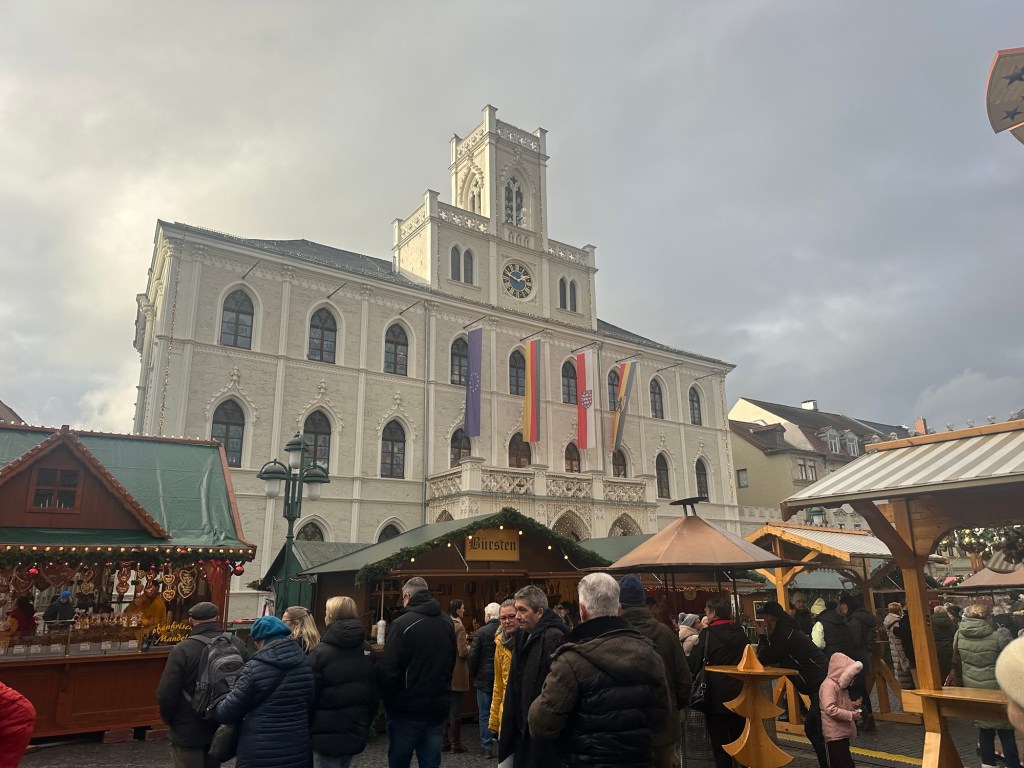
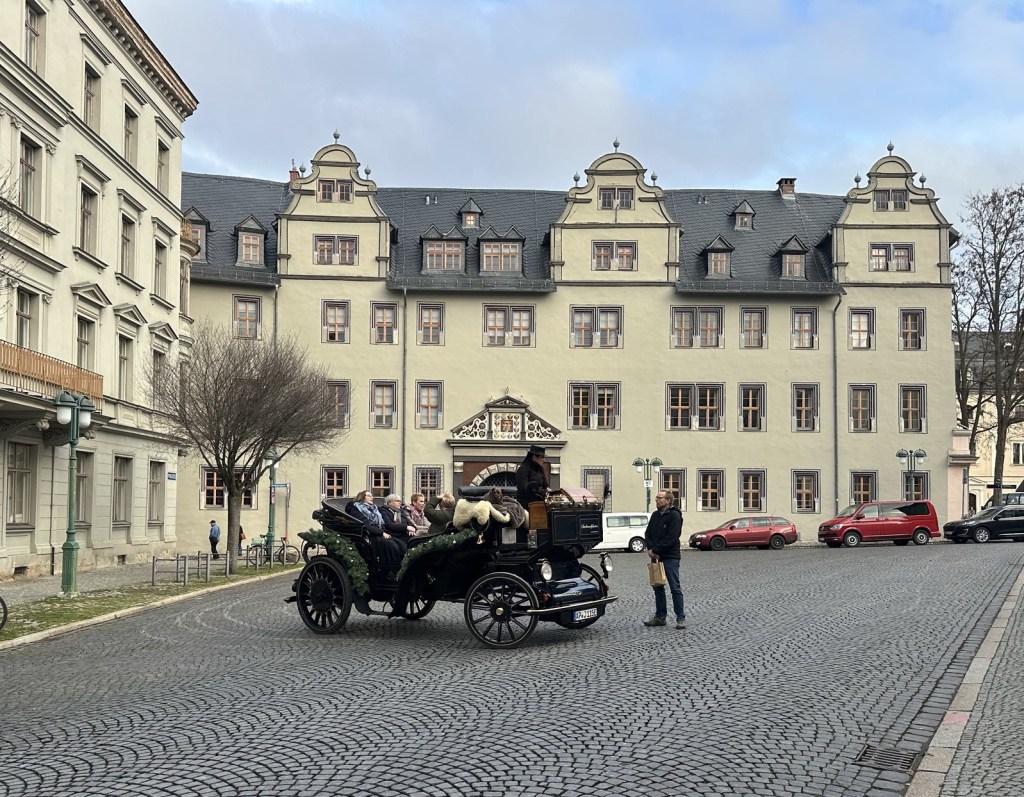
It’s definitely beautiful, and its architecture has a Viennese feel. The city deserves a stop all on its own. We saw groups touring in antique cars, which looked like a fun way to explore the area.
Our final stop was in Erfurt. Erfurt is the historic capital of Thuringia, Germany, known for its well-preserved medieval old town and charming cobblestone streets. Its highlights include the Erfurt Cathedral where Martin Luther was ordained and the Church of St. Severus next door where Luther was first a catholic monk before he went on to start the Protestant Reformation, and numerous Gothic and Renaissance buildings that reflect the city’s rich architectural heritage.
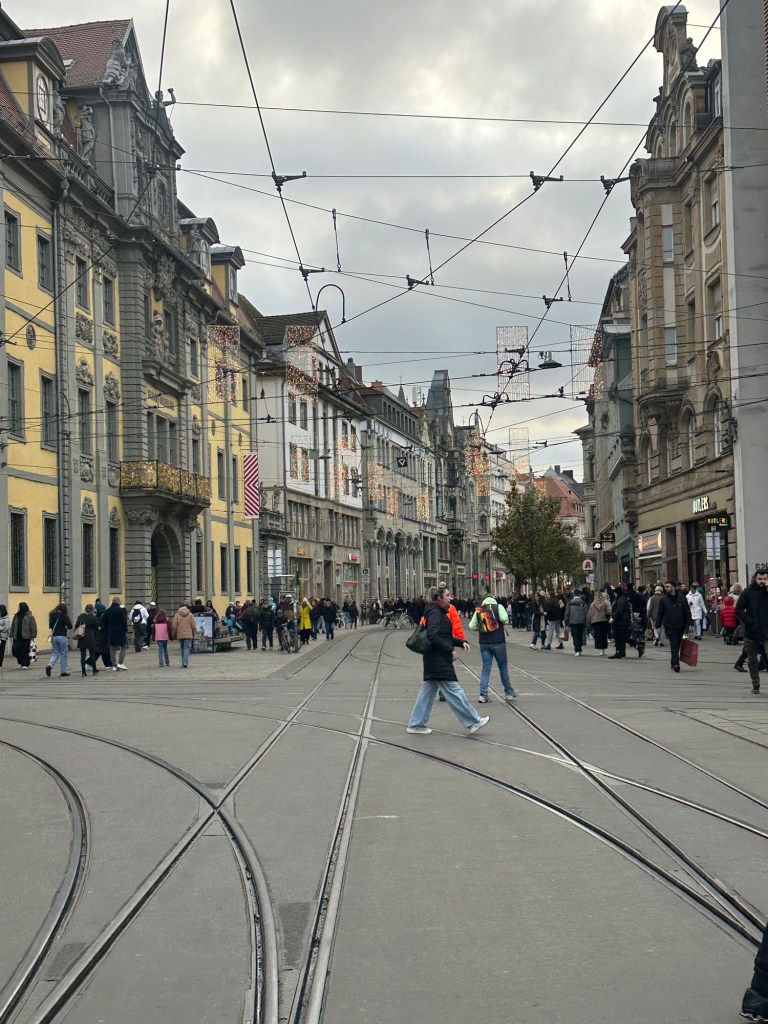
The first thing we noticed was how huge Erfurt was! While its population is only a third of Stuttgart’s, it is much more spread out and definitely feels bigger. There were also lots of huge Soviet era apartment buildings as it was also part of East Germany.
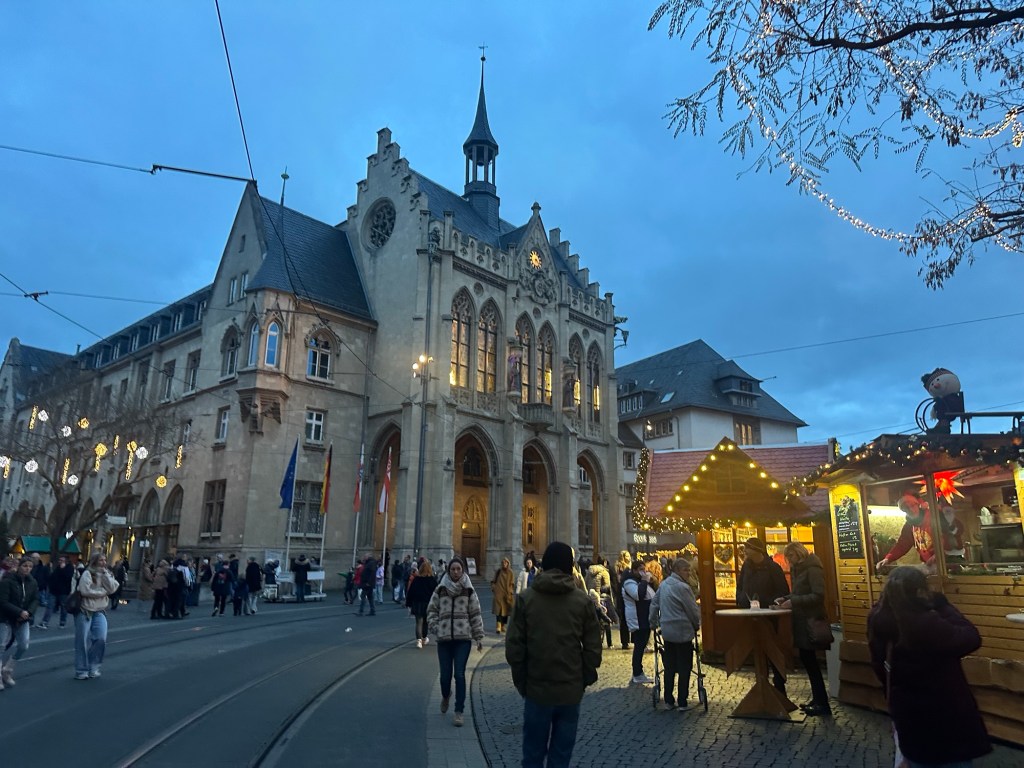
While the city’s population may be smaller, the place was packed! People must have come from all over the region that night for the huge Christmas market. We couldn’t find parking for almost thirty minutes and had to wait for a spot to open in a garage before we could enter. Then, we navigated the crowded streets to the market.
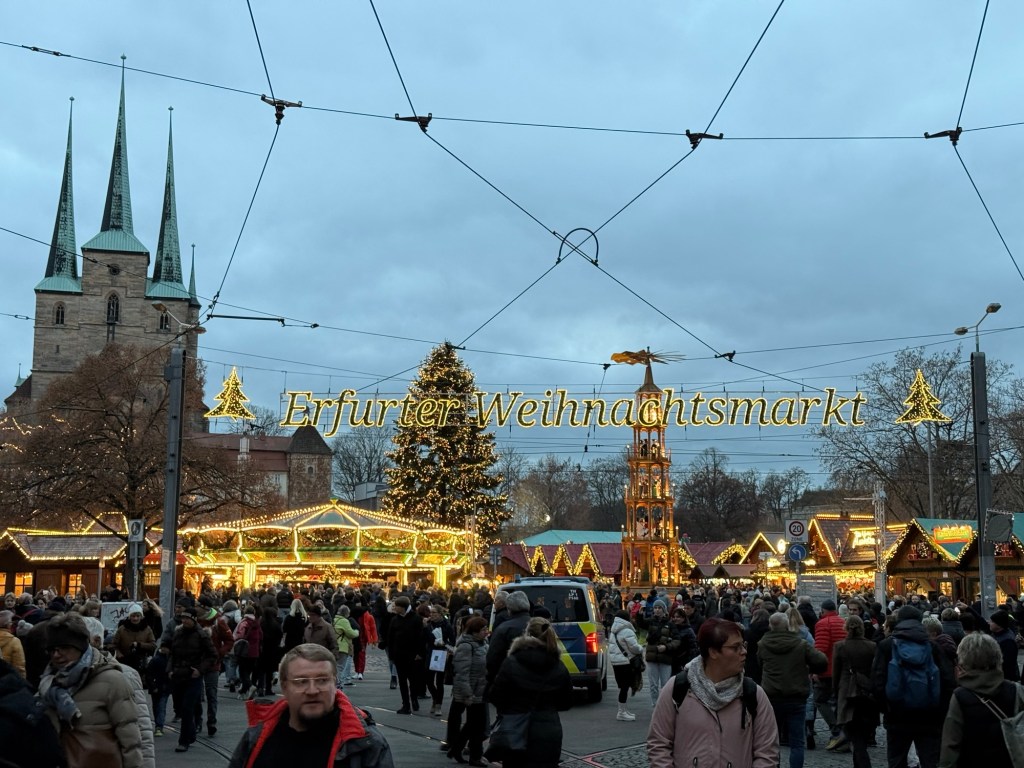
This market is huge and beautifully set in the Domplatz, in front of the Cathedral and church. The market offered tons of rides, and with all the crowds, it felt more like an Oktoberfest festival than a traditional Christmas market.
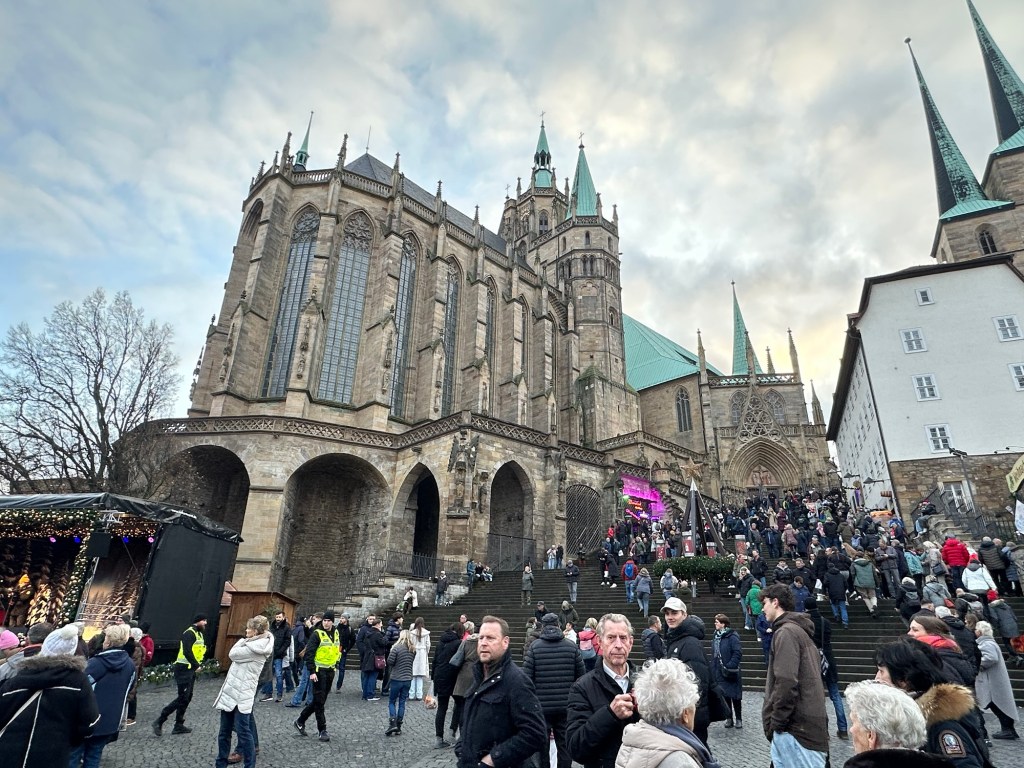
Matt and the kids had meat on a stick for dinner and I had another Langos- at this point garlic is probably seeping through my pores. We also found lots of cute mugs for the collection. Erfurt actually has several markets spread out over the city so we took an indirect path through several more before reaching the car.
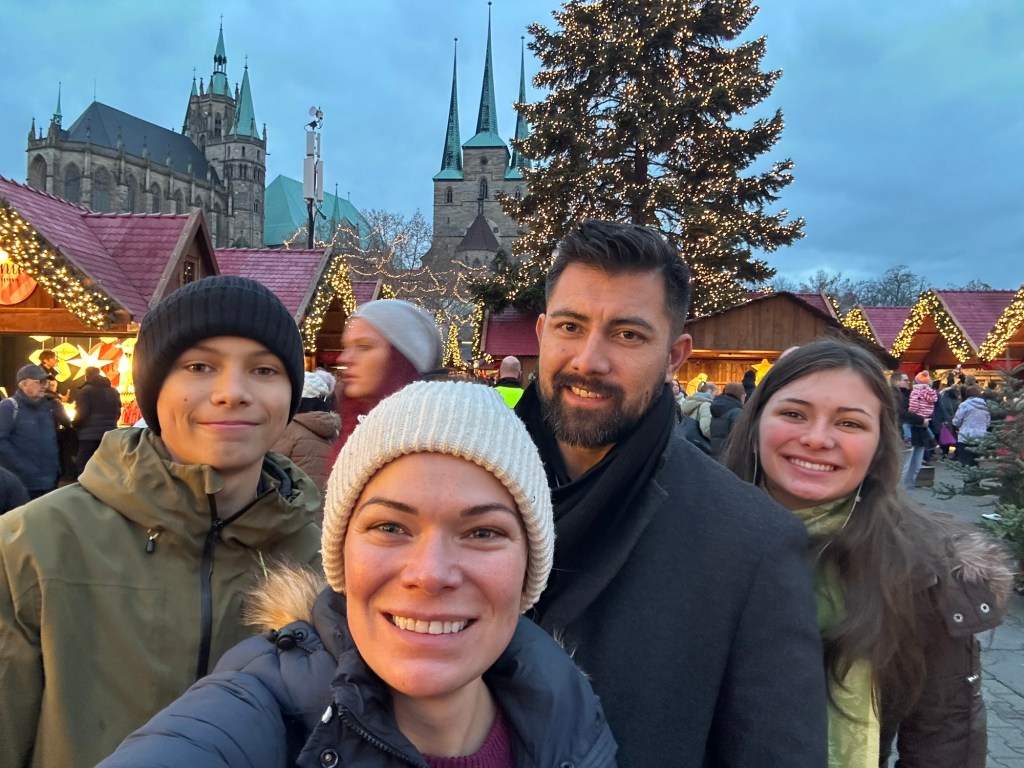
We had originally planned to stay overnight in Erfurt, but since it was still fairly early and rain was forecast for Sunday, we decided to make the three-hour drive back that night instead. Erfurt definitely deserves its own standalone trip, so I’ll be back to explore the sights—hopefully when it’s not so crowded during the Christmas market.
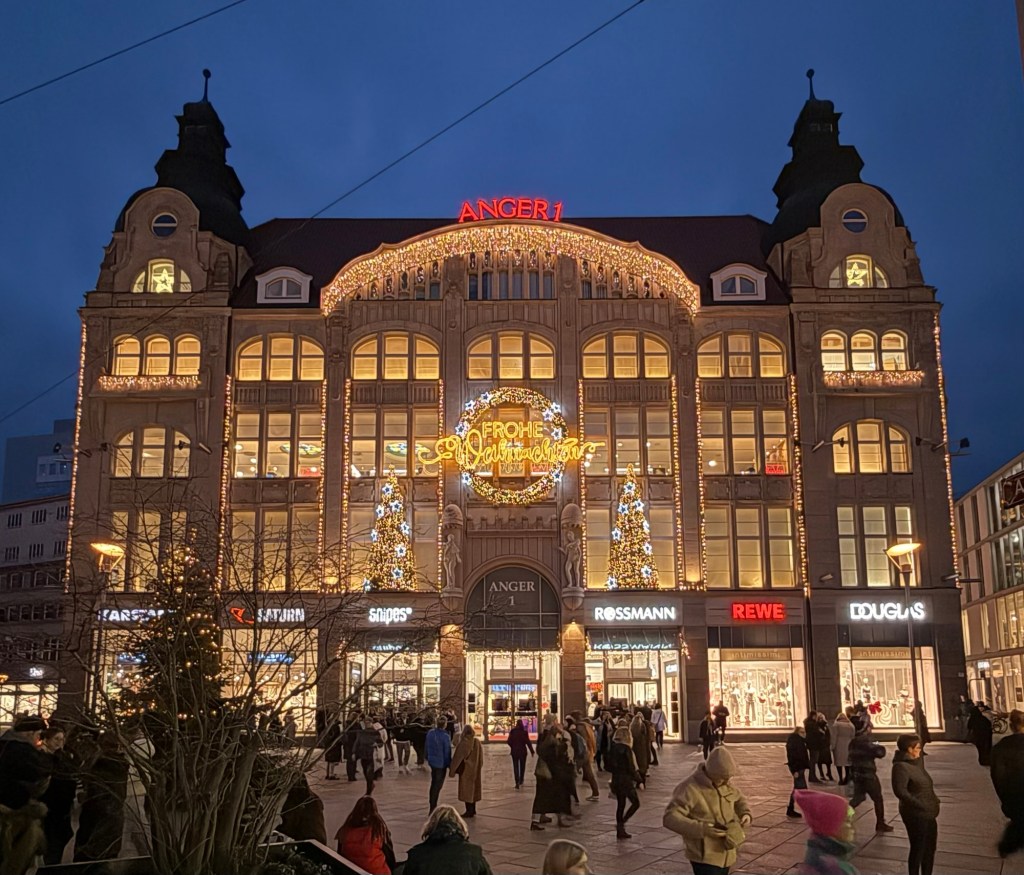
We were home by 9 p.m. and even had time to do a load of laundry before bed.
We got to sleep in on Sunday but sadly woke up to rain. We had planned to do one or two more local Christmas markers but the rain held back our plans. We got some things done around the house and prepped for the week ahead. We even took a nap.
By early evening, the rain had let up enough for us to make a quick visit to the Boblingen Christmas market. It’s always held on Thanksgiving weekend so we have missed it every year but once. I was so happy to get to stop by again!
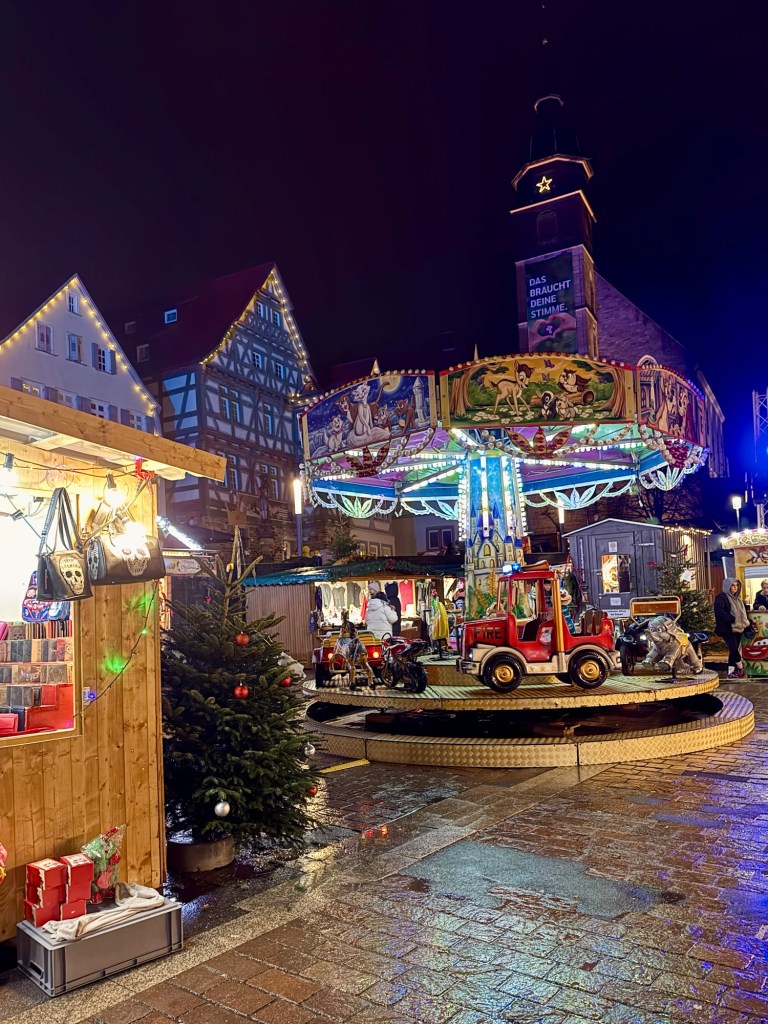
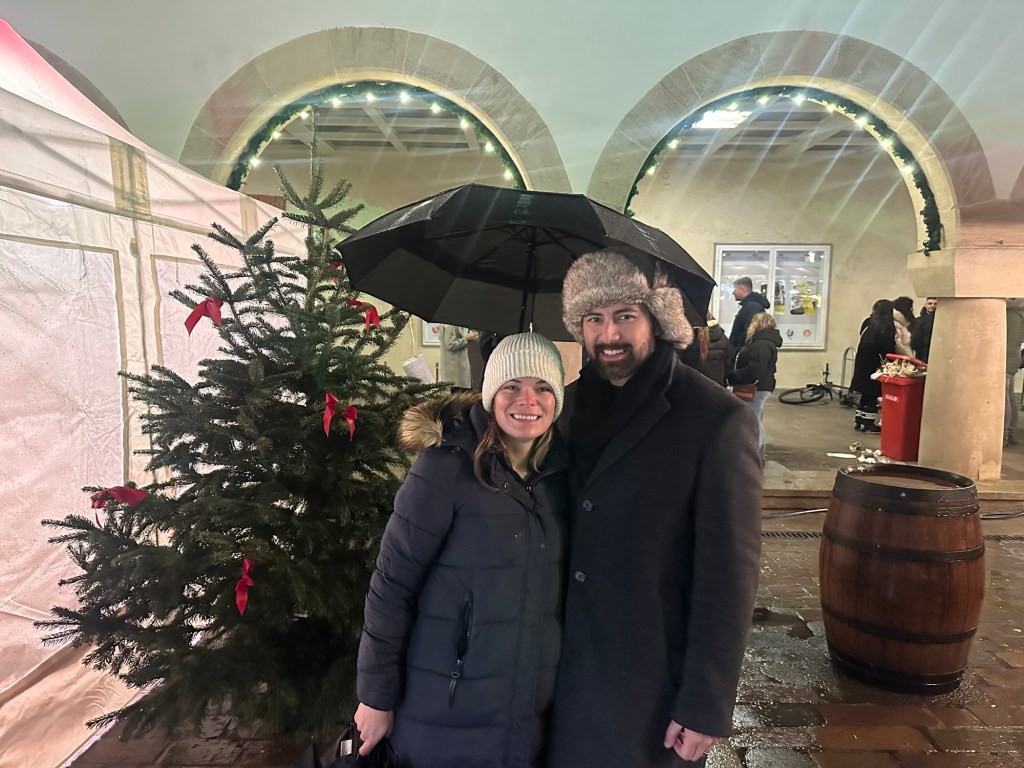
As usual, we picked up some Thai food after the market and finished the weekend on the couch!
 Gilcrests Abroad