It has cooled off a little in Stuttgart, although not quite as much as we had hoped. The forecast was calling for temperatures in the low 70s this week, but unfortunately they lingered in the 80s instead. Thankfully, the nights were noticeably cooler, which meant our portable AC units were finally able to cool a few rooms in the house to a comfortable temperature.
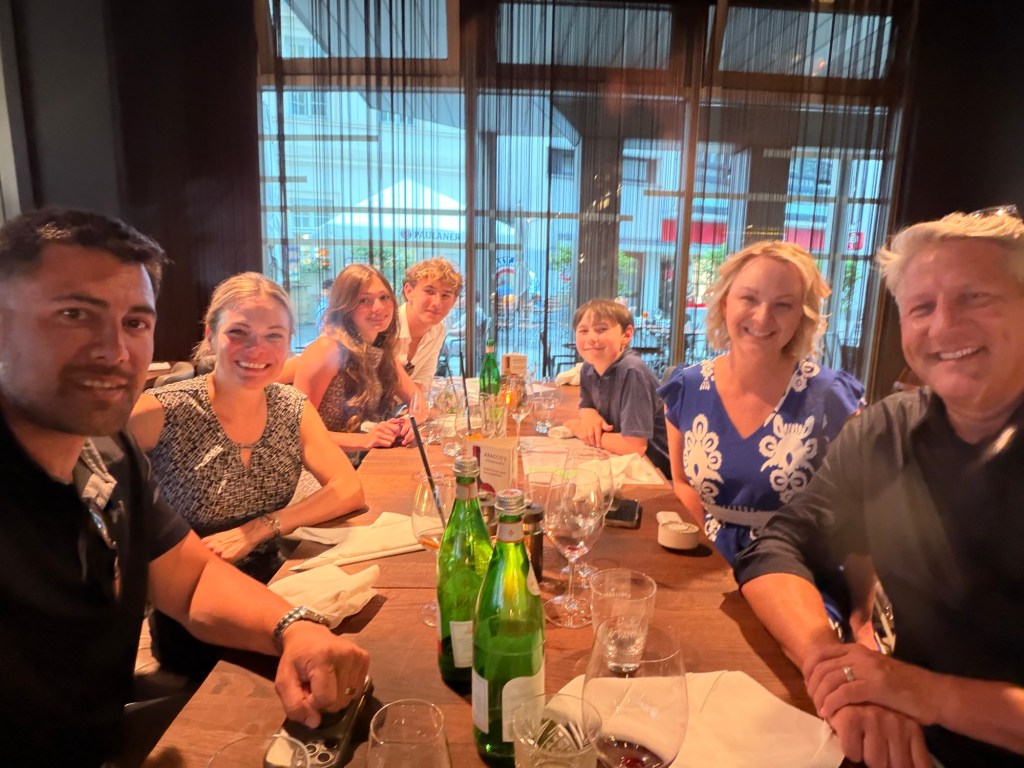
Even so, we mostly stayed indoors during the hottest parts of the day and only ventured out once the sun was lower in the sky. On Monday, we celebrated Carter’s 18th birthday with dinner at Abacco’s in downtown Stuttgart.
Then on Wednesday, we met friends for happy hour at Giarola Wine Bar, where they offer an unlimited charcuterie buffet, a welcome drink, and a complimentary limoncello for just €15. It was such a fun and surprisingly affordable evening that we’re already planning to go back next Wednesday.
Brooklyn and Ryan have continued holding down the fort at home during the weekdays. Actually, Ryan is holding down two forts. He and a group of friends have decided to spend part of their summer building a massive fort in the forest. I have to admit, I was a little surprised that a group of teenagers would choose to spend their summer this way, but they genuinely love being outdoors. I certainly can’t complain when that’s how he wants to spend his afternoons. The project is ambitious, so it will be quite a while before it’s finished, but they’re having a great time building it together.
This weekend was a long one thanks to the Independence Day holiday. Friday was a holiday for me, and I had some leave to use on Monday, so it was the perfect opportunity for a girls’ trip with Brooklyn to check another destination off her bucket list. She had been wanting to visit Liverpool for a Beatles themed weekend. She continues to introduce me to musical adventures I never would have planned on my own.
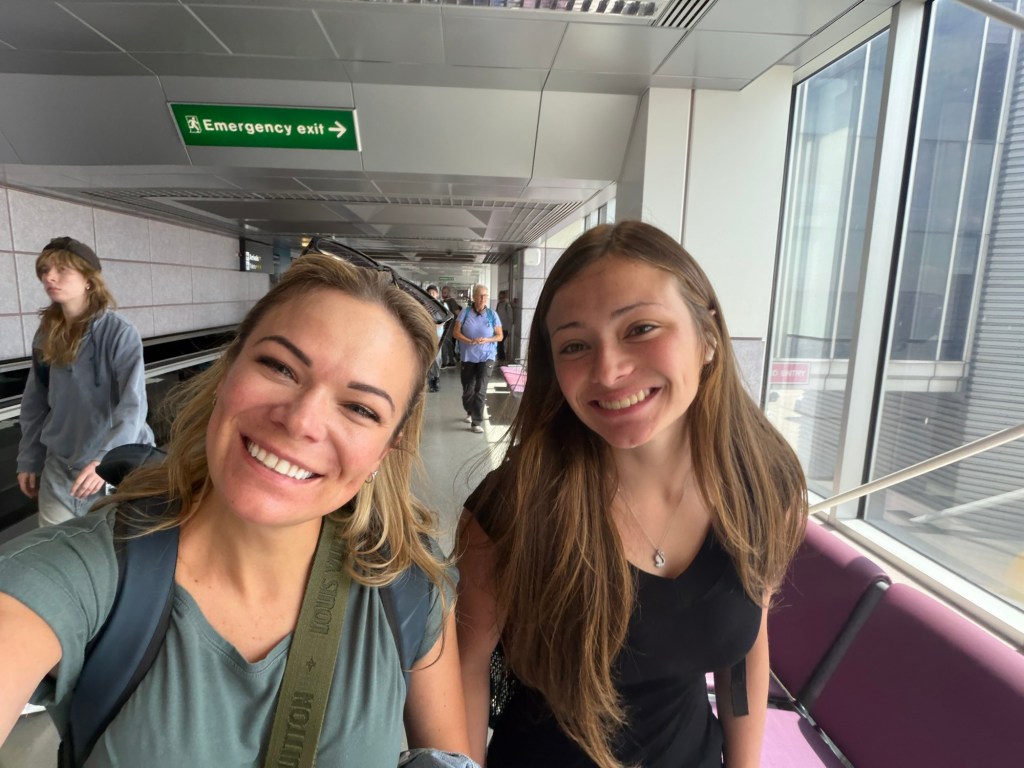
We flew from Stuttgart to Manchester around lunchtime before taking the train straight to Liverpool.
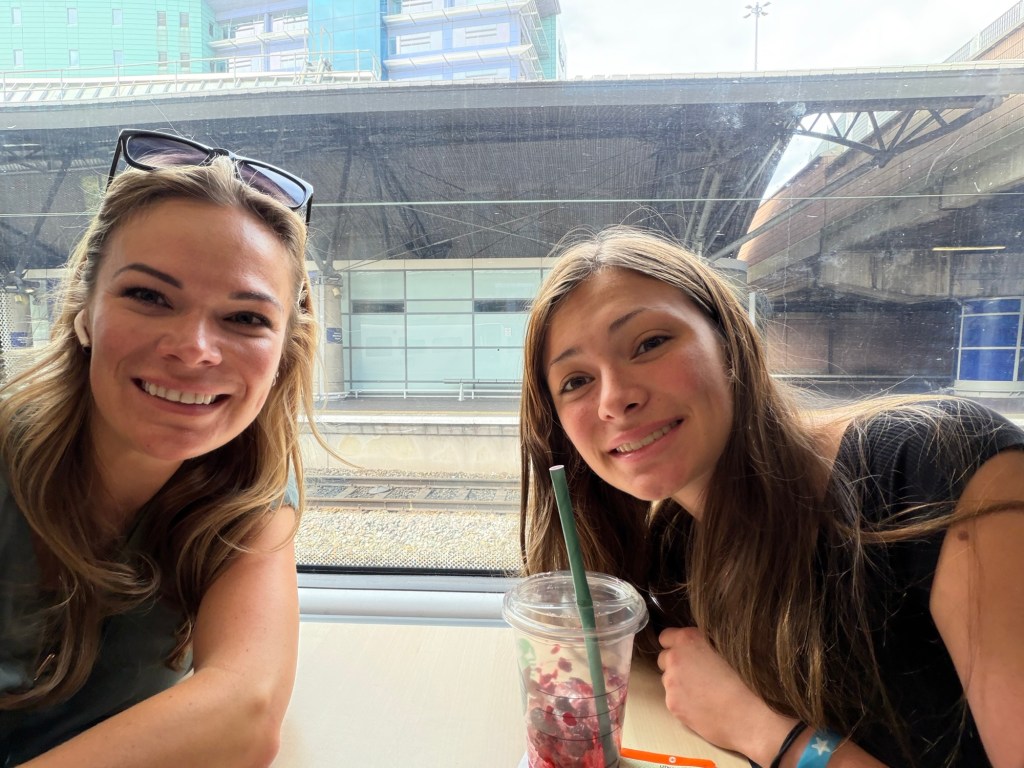
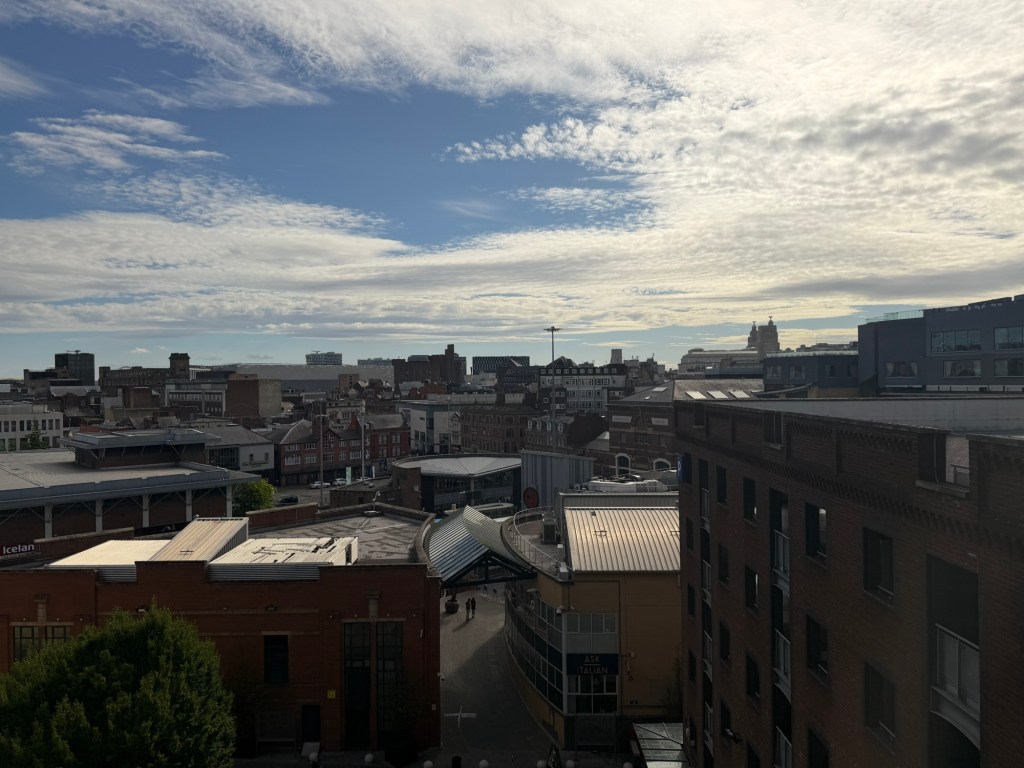
After checking into our hotel, we spent a little time exploring the city center, grabbed dinner from Nando’s, and then headed to our first Beatles experience, seeing the Cavern Club Beatles perform at the legendary Cavern Club.
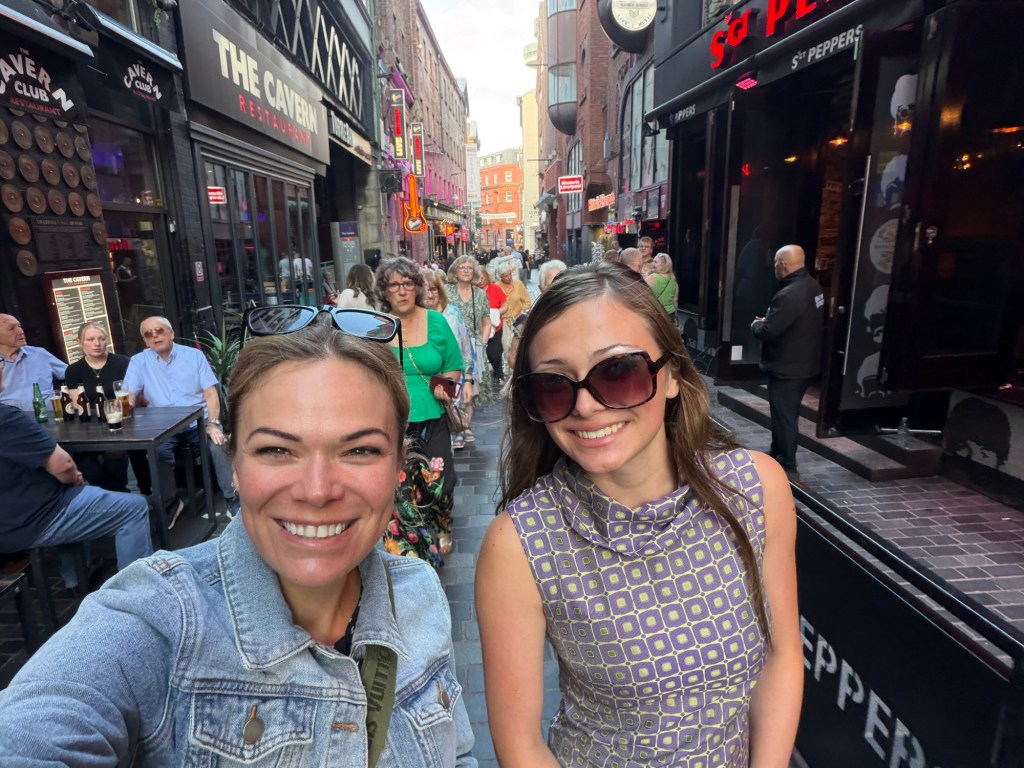
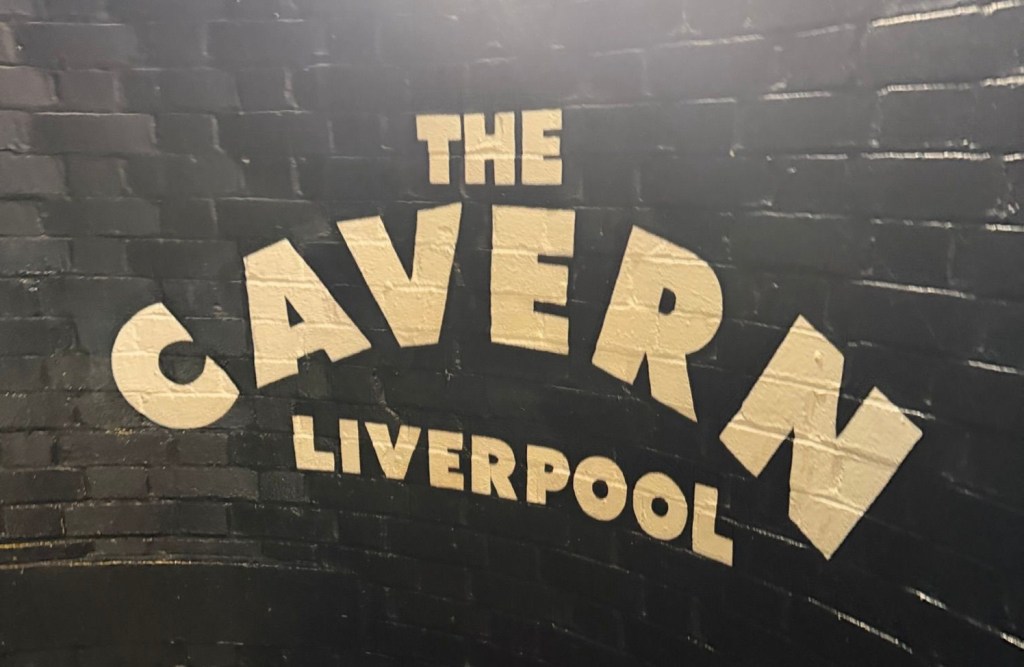
For those who are not Beatles fans, the Cavern Club is where the band played many of their early performances before becoming internationally famous. Today, the Cavern Club Beatles, the venue’s official tribute band, perform regularly in the same iconic basement space. It was the perfect way to begin our Beatles weekend.
Of course, we were easily the youngest people in attendance and found ourselves seated in the middle of a group of ten women in their 80s who were on a girls’ trip together. They were absolutely delightful and ended up making the evening even more memorable.
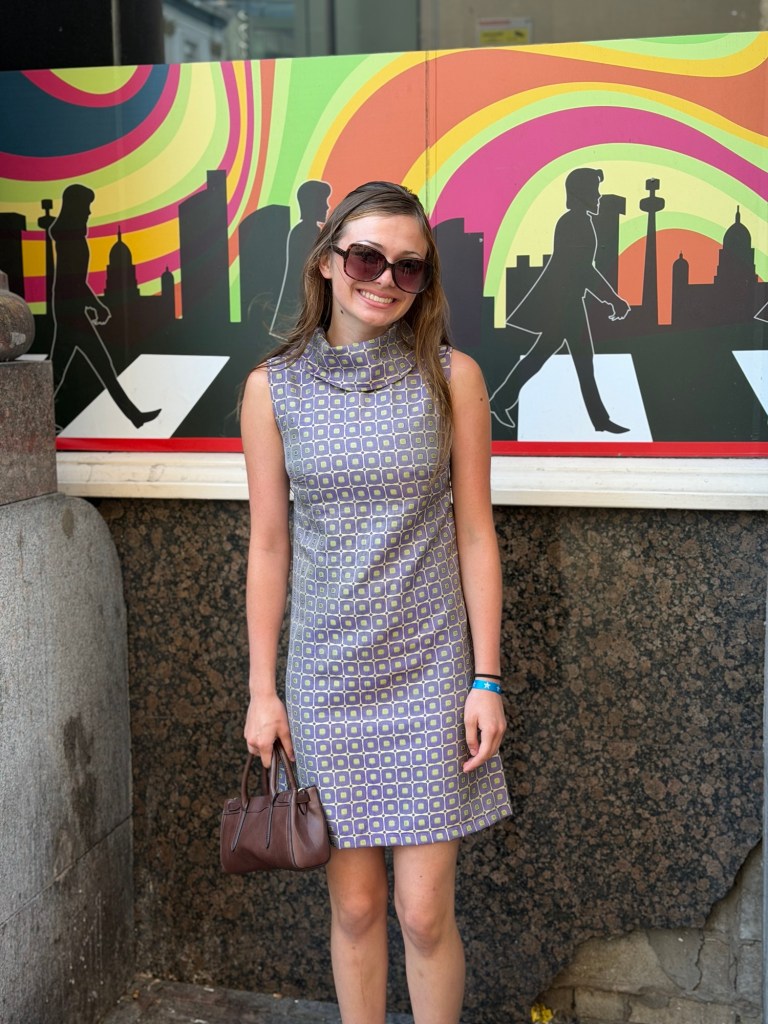
Many of them had stories about seeing the Beatles in person when they were younger. One woman recalled that after coming home from a concert, her mother asked what songs the Beatles had played. She laughed and said she had no idea because she could not hear a thing over all the girls screaming.
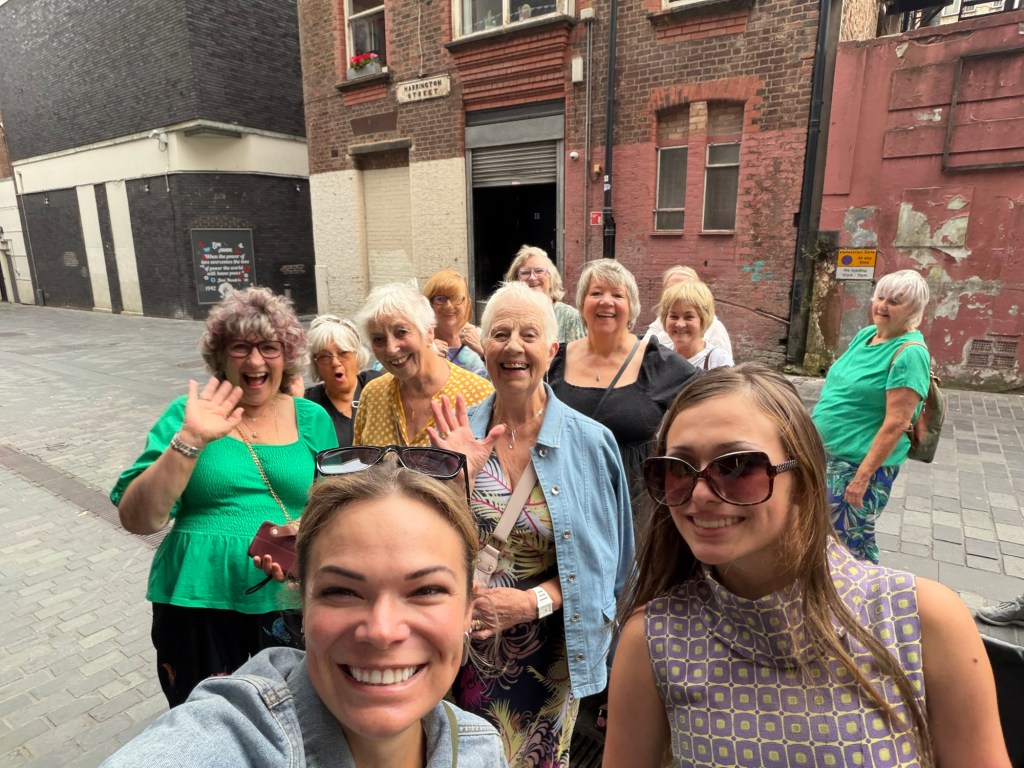
The band was outstanding, performing three hours of Beatles hits in a recreation of the original Cavern Club inside the Cavern Club Lounge. It was a fantastic performance and a perfect introduction to the city’s musical heritage.
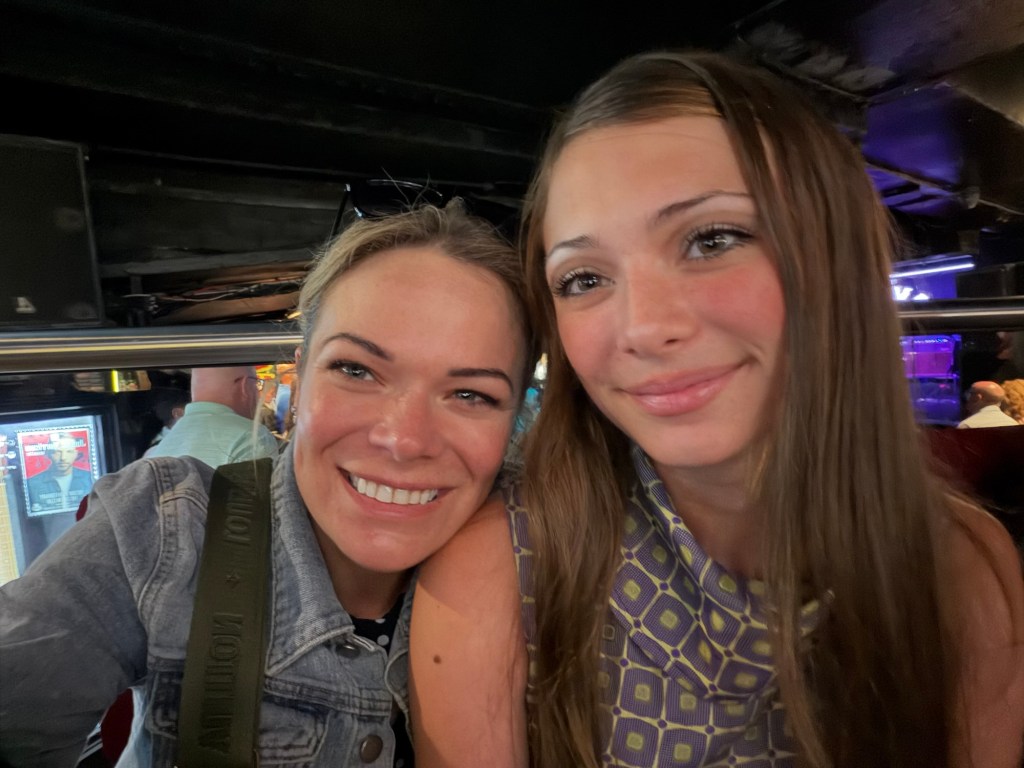
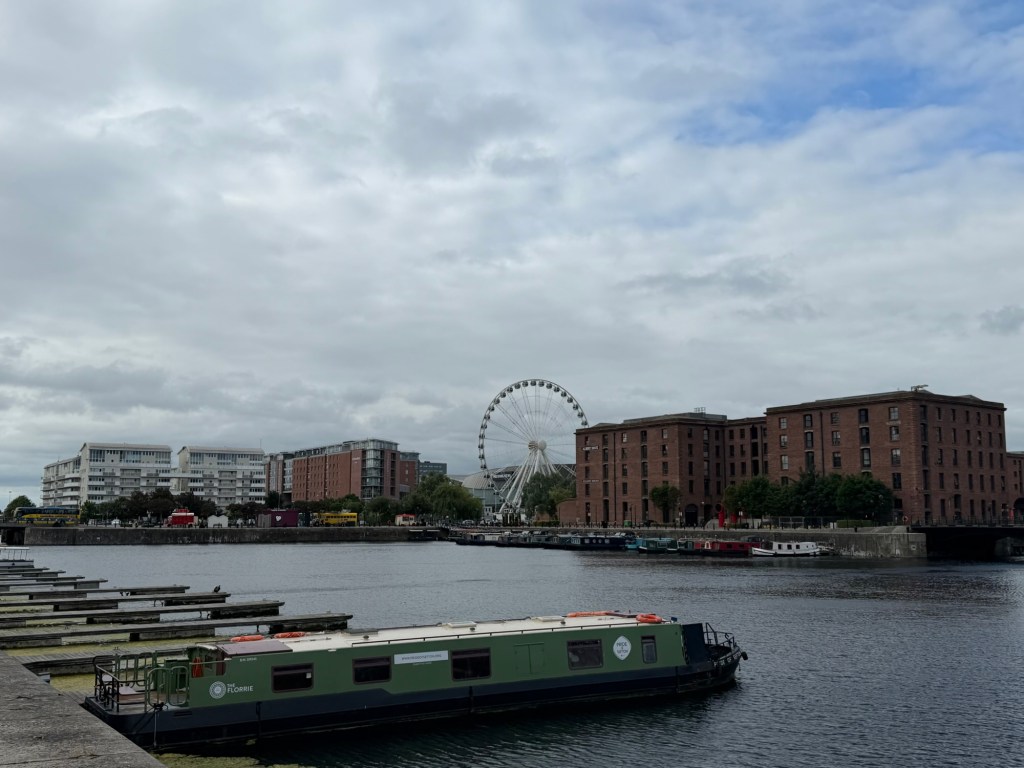
After our late Friday night, we were up early for breakfast before heading to the main event of our trip, the Beatles Magical Mystery Tour. Our walk to the meeting point took us through Liverpool’s shopping district and then its docklands, called the Quay, which offered a surprisingly pleasant and atmospheric first impression of the city.
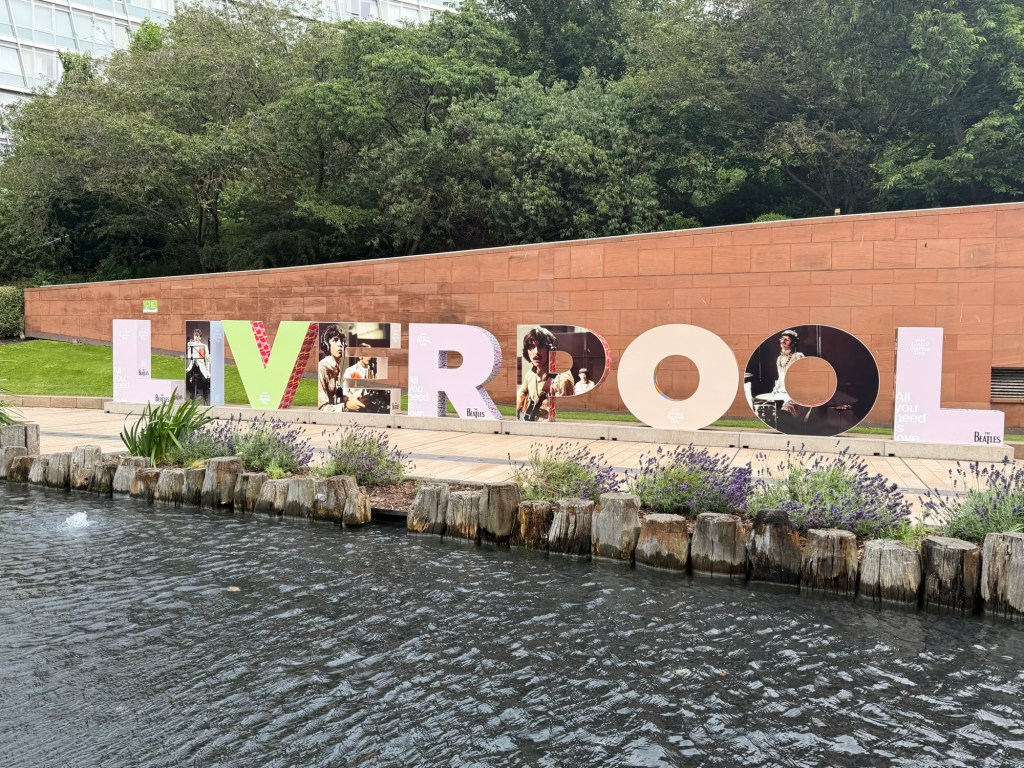
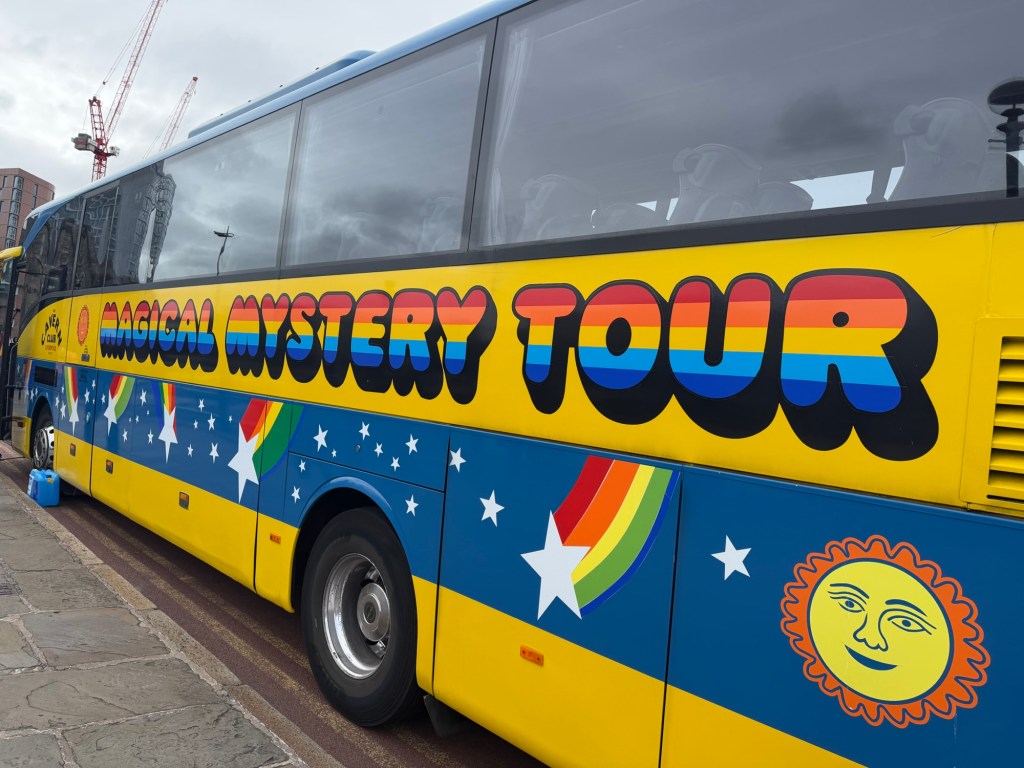
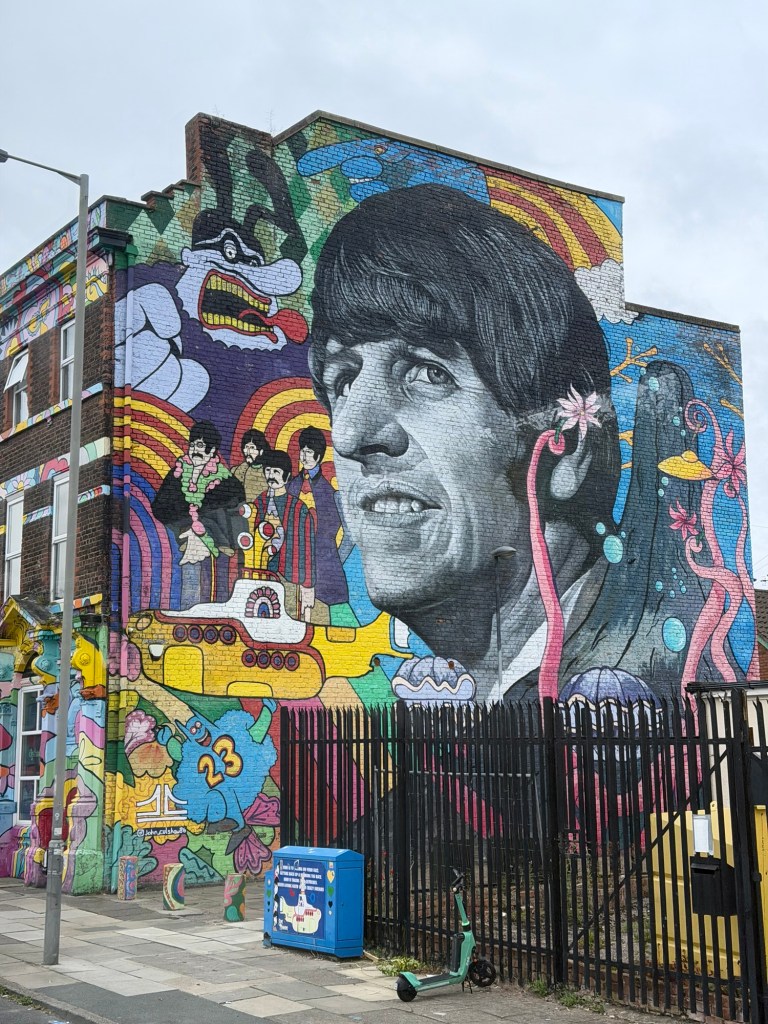
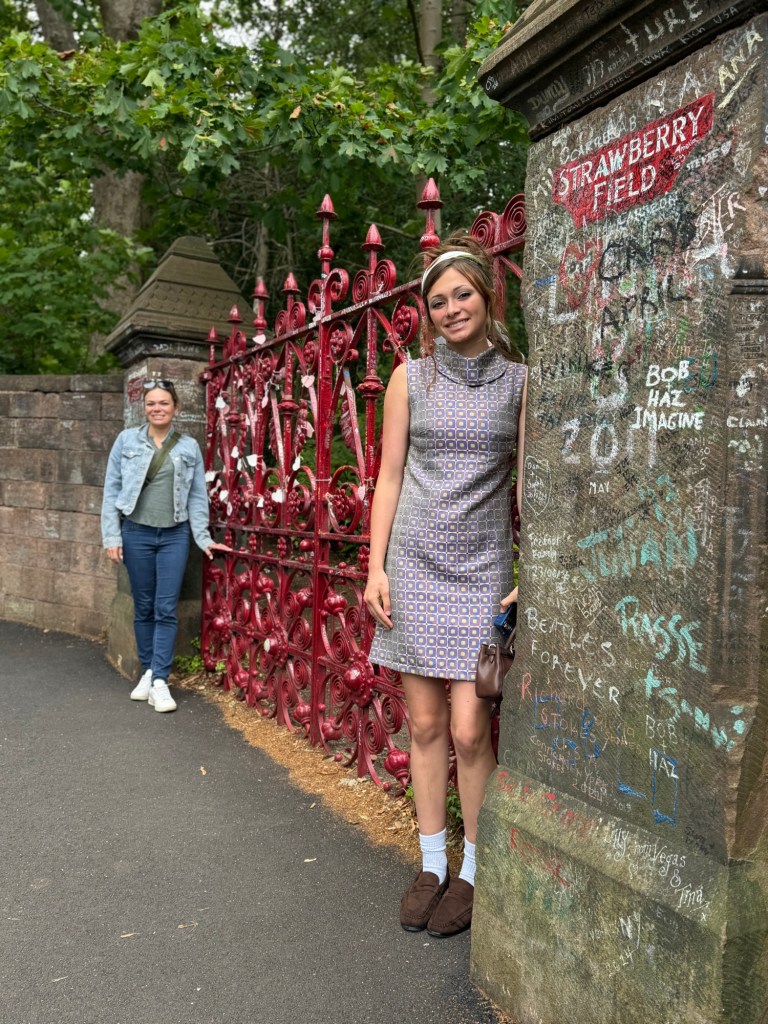
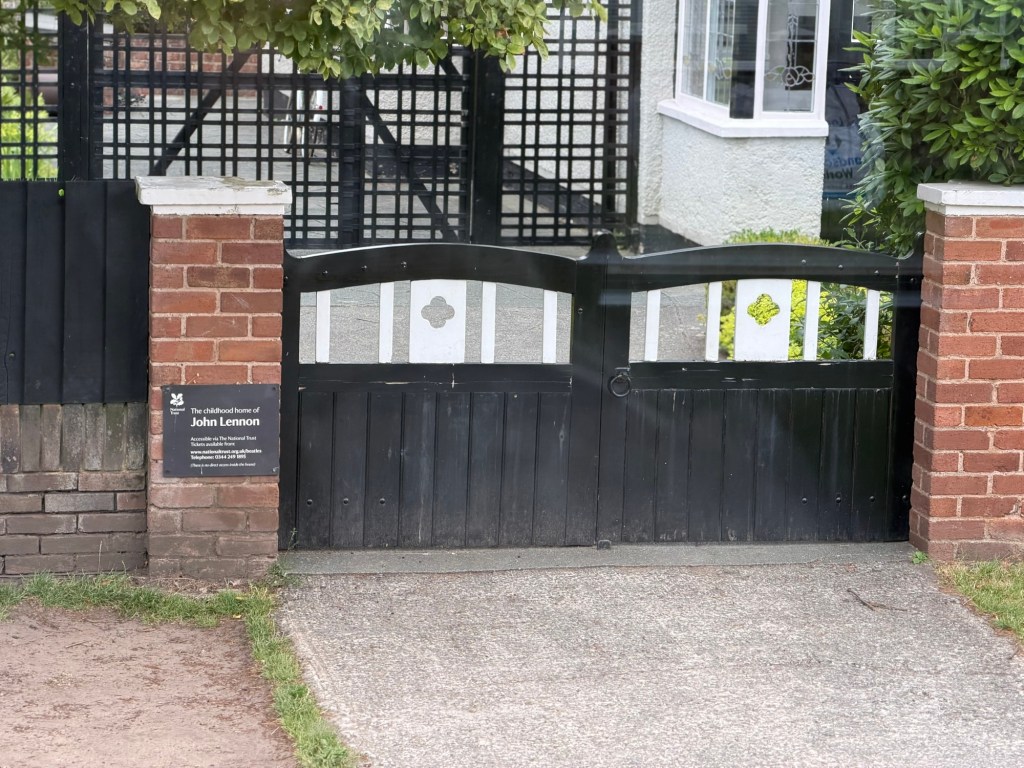
We met our bus and tour guide and headed off on the yellow blue psychadelically decorated bus. The tour covered many of the Beatles’ most famous landmarks, including the childhood homes of all four members, Penny Lane, and Strawberry Field.
Our guide was incredibly enthusiastic and knowledgeable, and before becoming a tour guide, he had performed in a Beatles tribute band that toured internationally, including in the United States. During one of the walks off the bus, he asked where we were from and when we told him Maryland, he named a few places in Annapolis where his band had played; pretty cool!
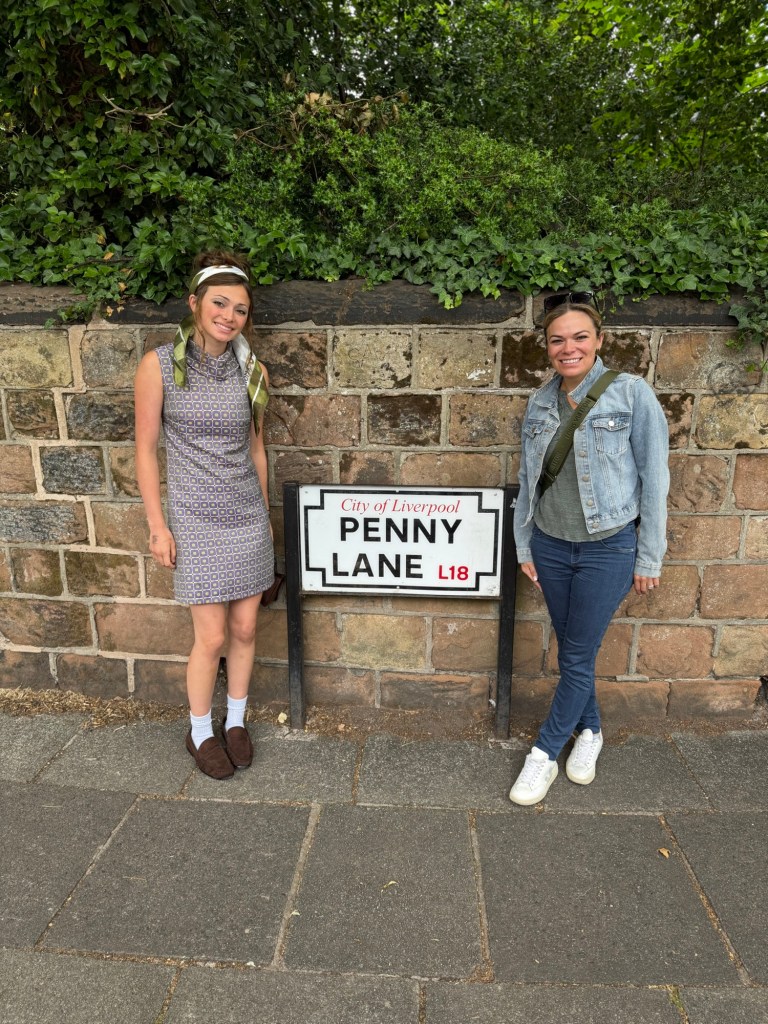
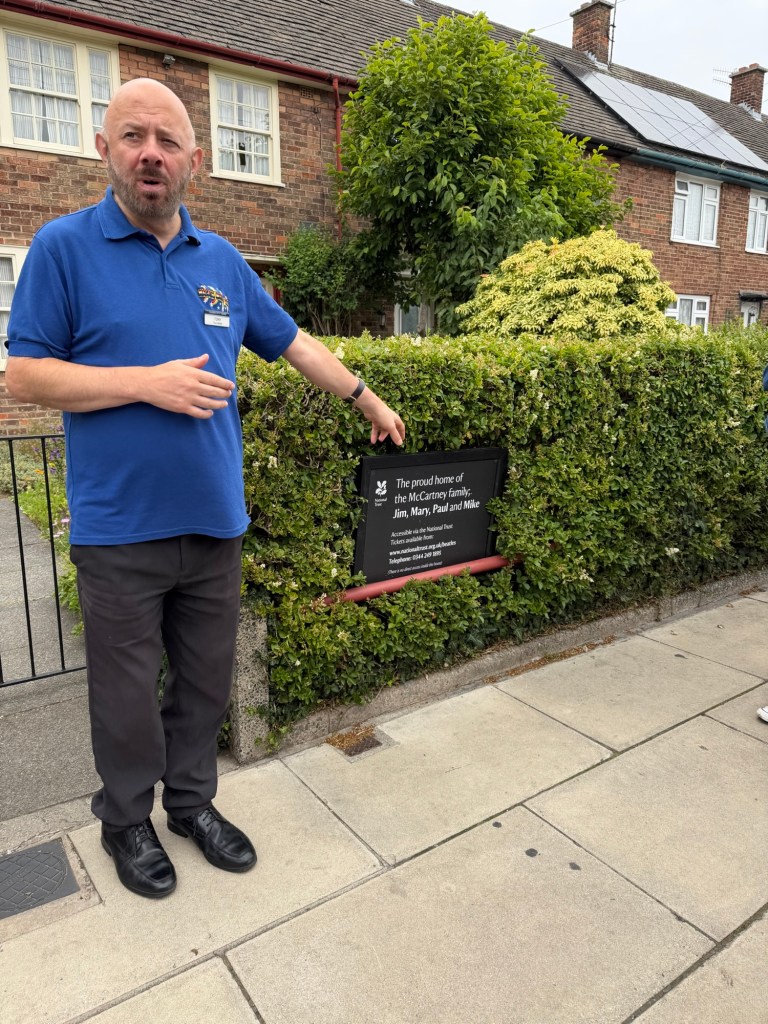
My favorite moment came though when we were standing in front of Paul McCartney’s childhood home. Our guide asked everyone who their favorite Beatle was. After everyone else had shared, he told us that his favorite was Paul and then said theres a very good reason. Then he smiled and pointed down the street, “Do you see that cream colored house down the lane? That was my childhood home.”

Although he was younger than the Beatles, his mother had grown up with Paul McCartney, and he had met Paul several times through his music career and talked about growing up on that street. It was a remarkable personal connection that made the stop feel especially meaningful. It’s easy to see why the guide was so knowledgeable and passionate about the Beatles.
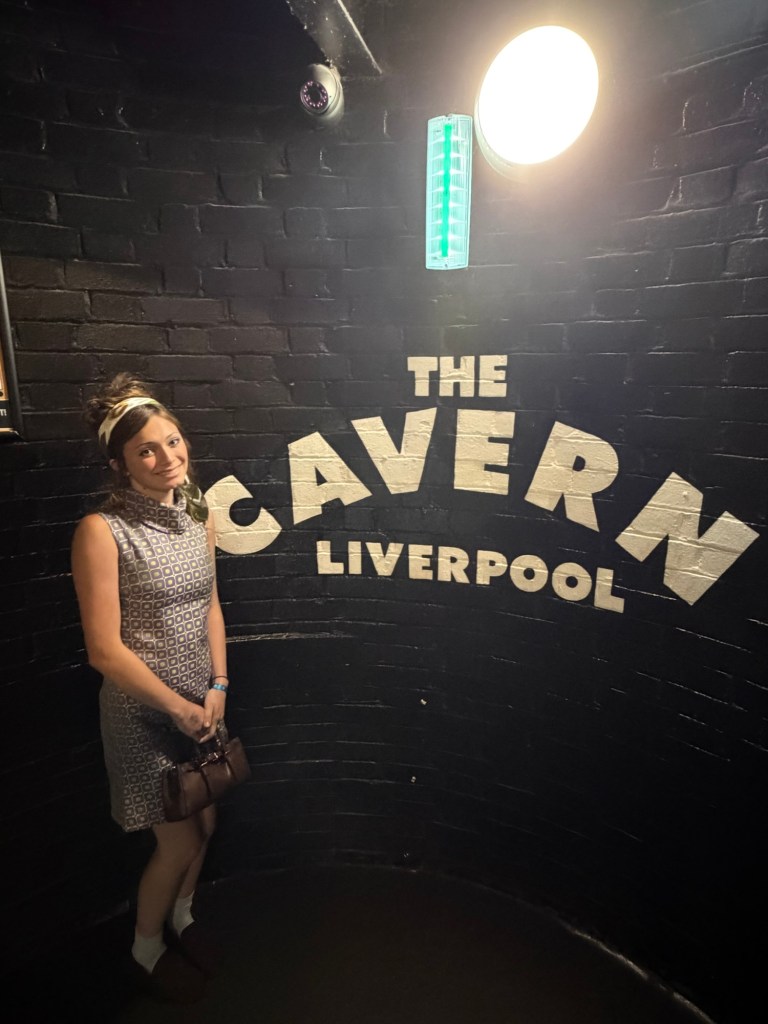
When the tour ended, we returned to the Cavern Cub for one last visit before grabbing lunch at Five Guys. With a couple of hours before our train, we headed back to the hotel for a short rest before leaving the city.
One of the biggest surprises of the trip was just how much I enjoyed Liverpool. Before visiting, I had expected a dull industrial city, but instead found a place that felt lively, welcoming, and full of character. The city center has been transformed over the past couple of decades, particularly after being named European Capital of Culture in 2008. Restored brick buildings give the downtown area a cohesive charm, while the city’s port history is reflected in its diverse international food scene.
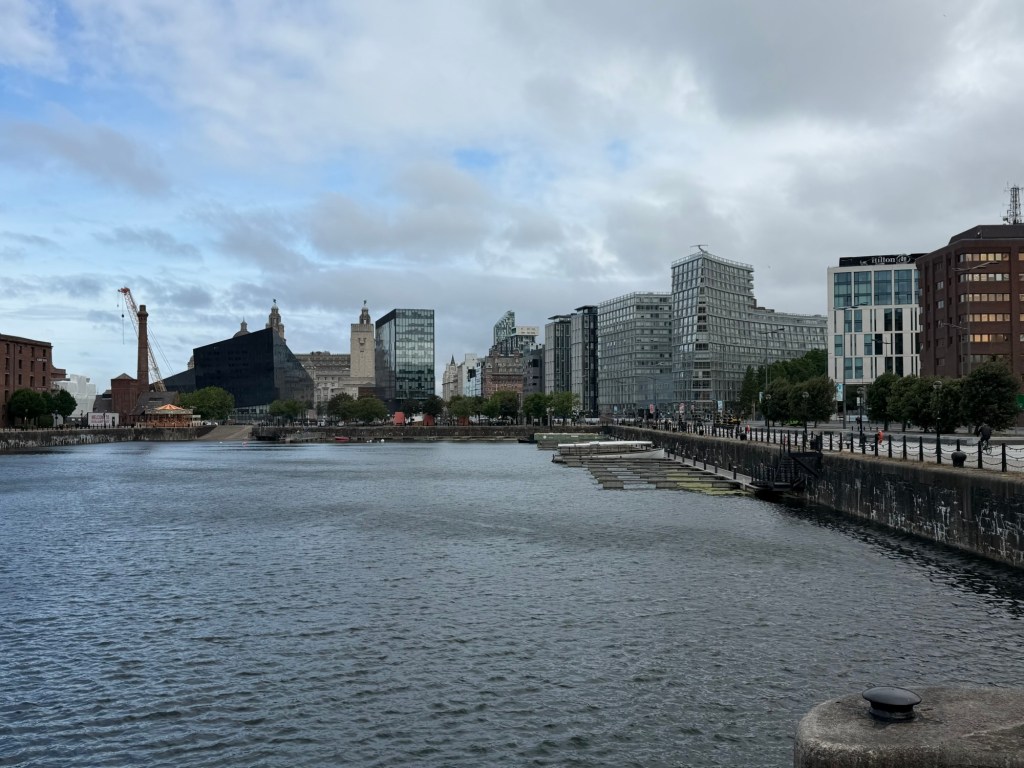
What stood out most was the atmosphere after dark. The Cavern Quarter came alive with live music spilling from pubs and crowds filling the streets. It had a raw, musical energy that reminded me of Nashville or New Orleans, where performance feels woven into everyday life. Even if you are not a Beatles fan, Liverpool is absolutely worth visiting and is somewhere I would happily return to. I plan to try and entice some friends into making a return trip for a whole weekend.
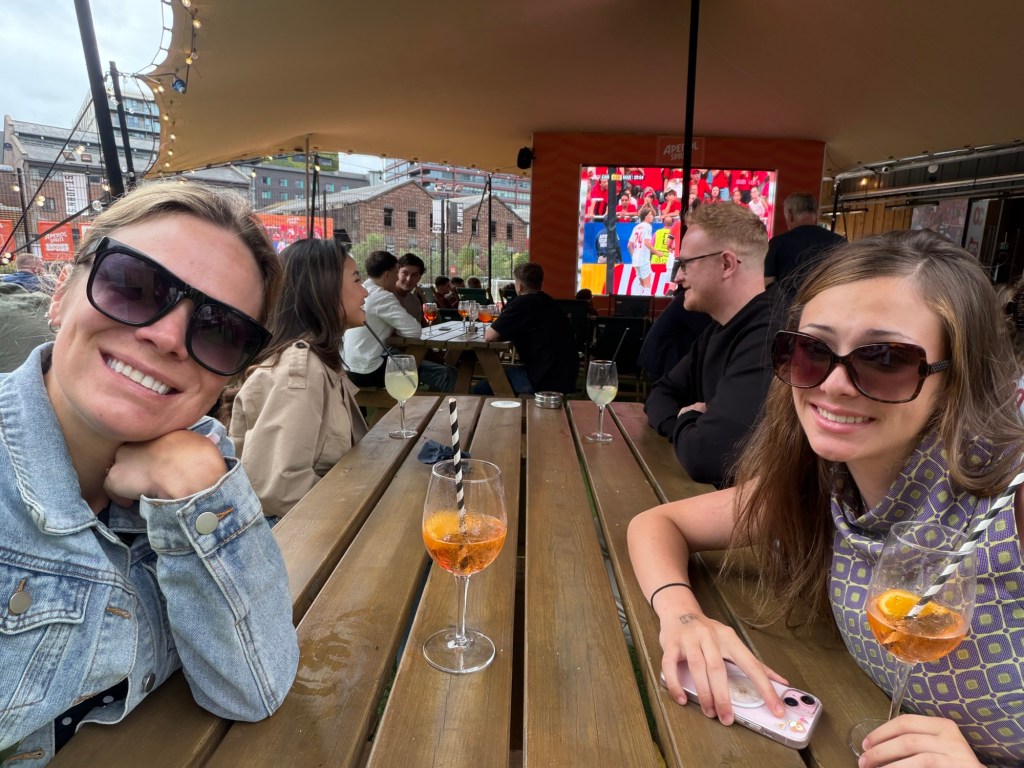
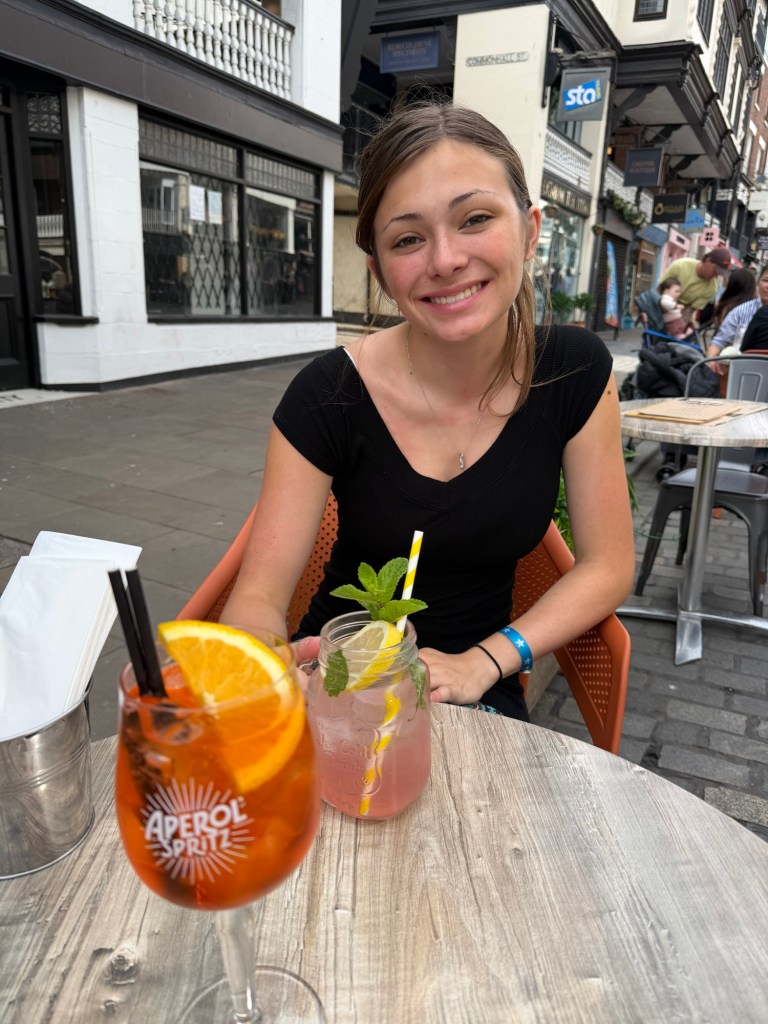
A one hour train ride brought us back to Manchester, where we checked into our hotel and freshened up. Before our evening plans, we stopped by The Courts Club, an Aperol and tennis themed beer garden next to the hotel, for a few snacks and drinks.
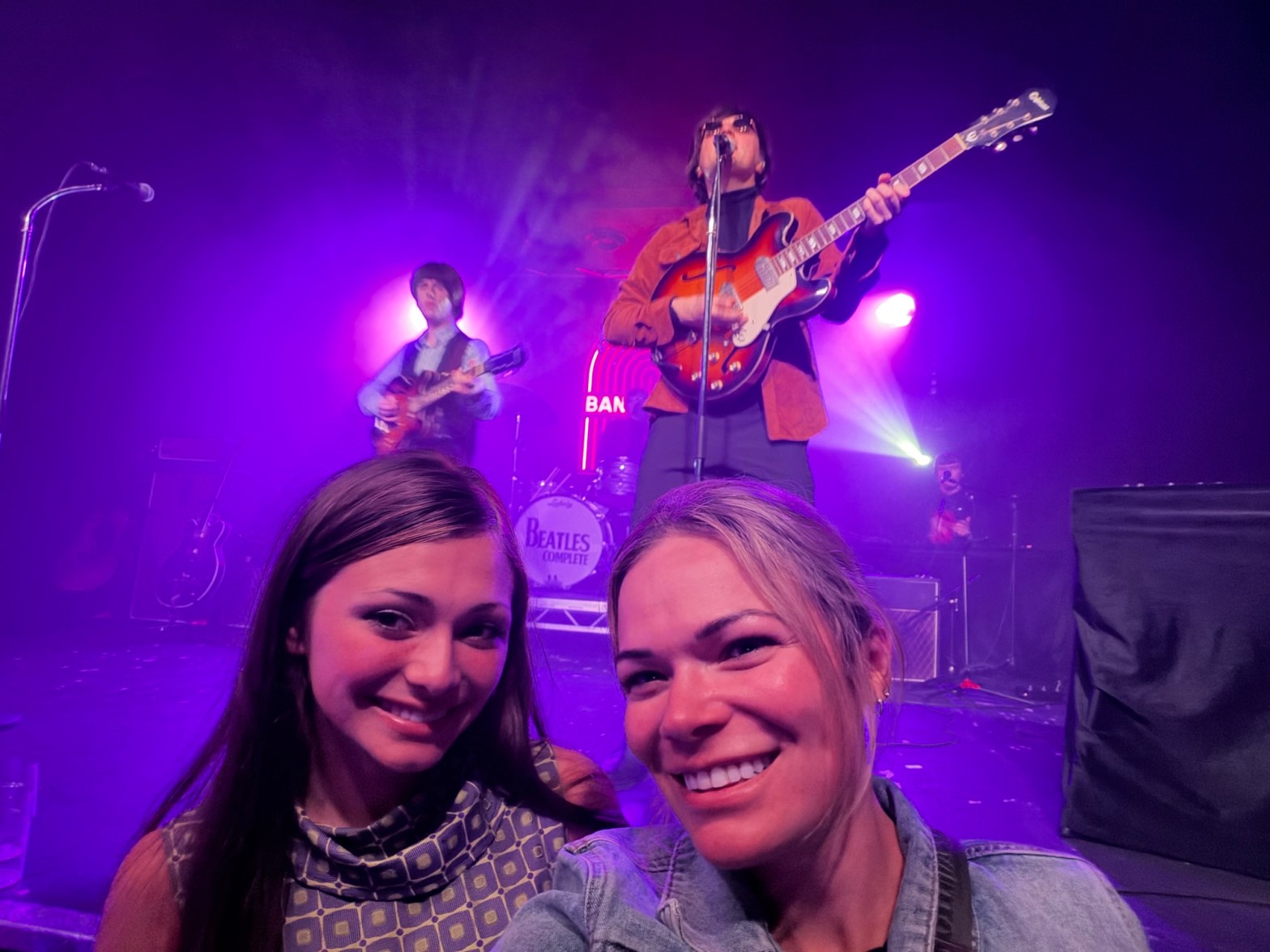
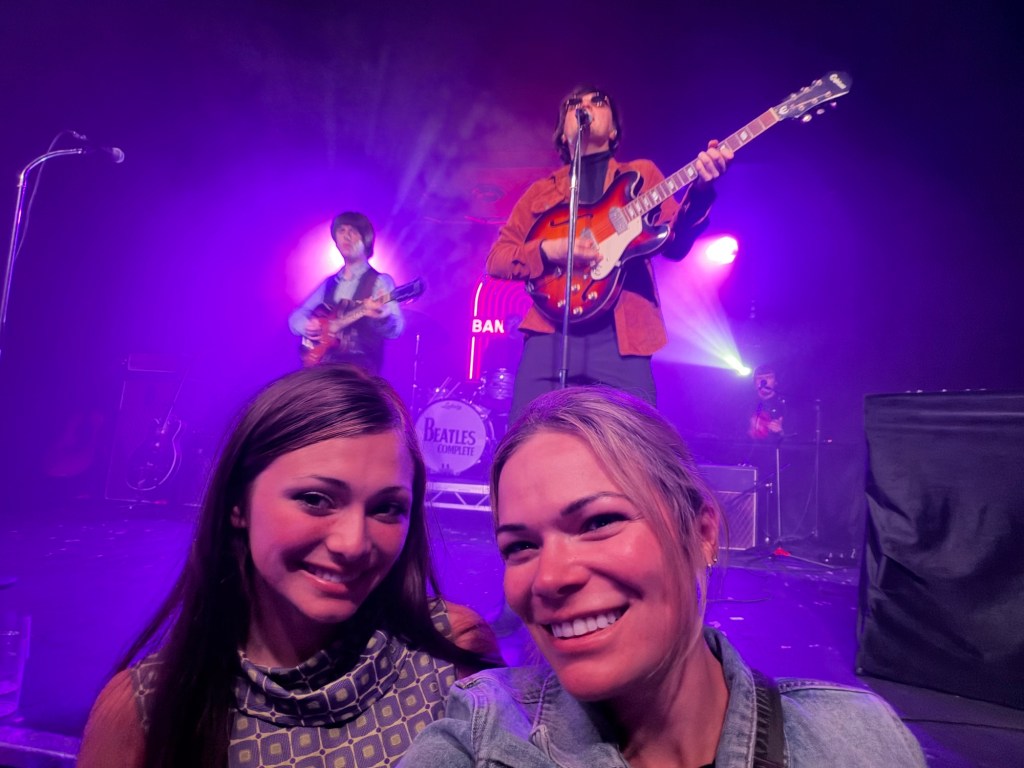
That night we saw our next Beatles concert, this time by Beatles Complete perform at Band on the Wall. Arriving early meant we were right at the front of the stage, and we actually enjoyed this show even more than the night before. The atmosphre was completely different though. Compared to the night before, this was a much younger crowd, ith standing room only. Everyone was dancing and singing all night. After another great evening of music, we were back at the hotel by midnight.
The next morning, we were up early once again to meet our next tour at 8:00 a.m. We joined an organized day trip to North Wales and Chester. We ended up having the most fantastic tour guide I have ever had. I knew this tour would involve a lot of time on the road, so I was not sure if we would simply be riding in silence or getting much commentary. Our guide, Darrin, however, provided the most interesting and thoughtful narration for almost the entire time we were on the road, which added up to about five hours total that day. He delivered everything in such an engaging way that I genuinely thought he must have a background in theater, all while expertly driving a full sized minibus.
As we left Manchester, he gave us a brief history of Manchester, explaining that the area was originally settled by the Romans as Mamucium, a small fort established around AD 79. It later grew into a major textile hub during the Industrial Revolution, becoming known as the world’s first industrialized city. In the modern era, Manchester has transformed again into a center for media, education, technology, and finance, with major redevelopment reshaping much of its skyline and economy. He also shared insight into the city’s current expansion and the large number of new developments underway.
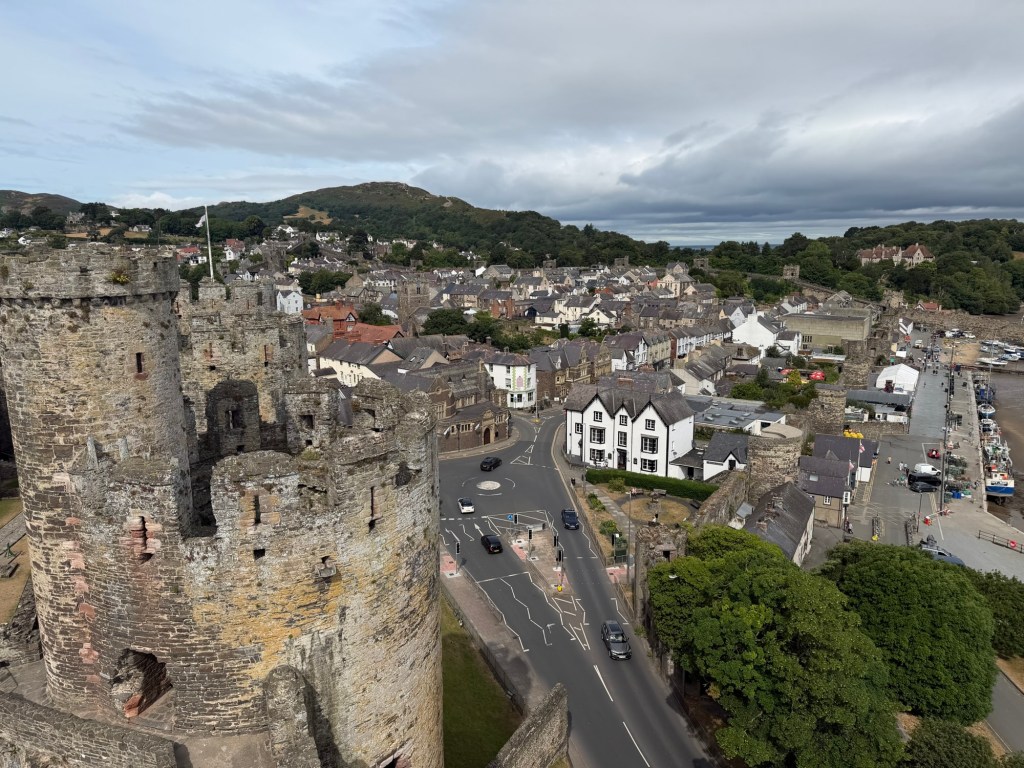
As we got closer to Wales, Darrin shifted into stories about Welsh culture, identity, and the long history of resistance and calls for greater independence. He explained how the landscape is deeply tied to Welsh identity and how medieval castle systems, built by the English during the conquest of Wales, still shape many of the towns and regions today. Conwy Castle, which we would later visit, is one of the most well preserved examples of this network.
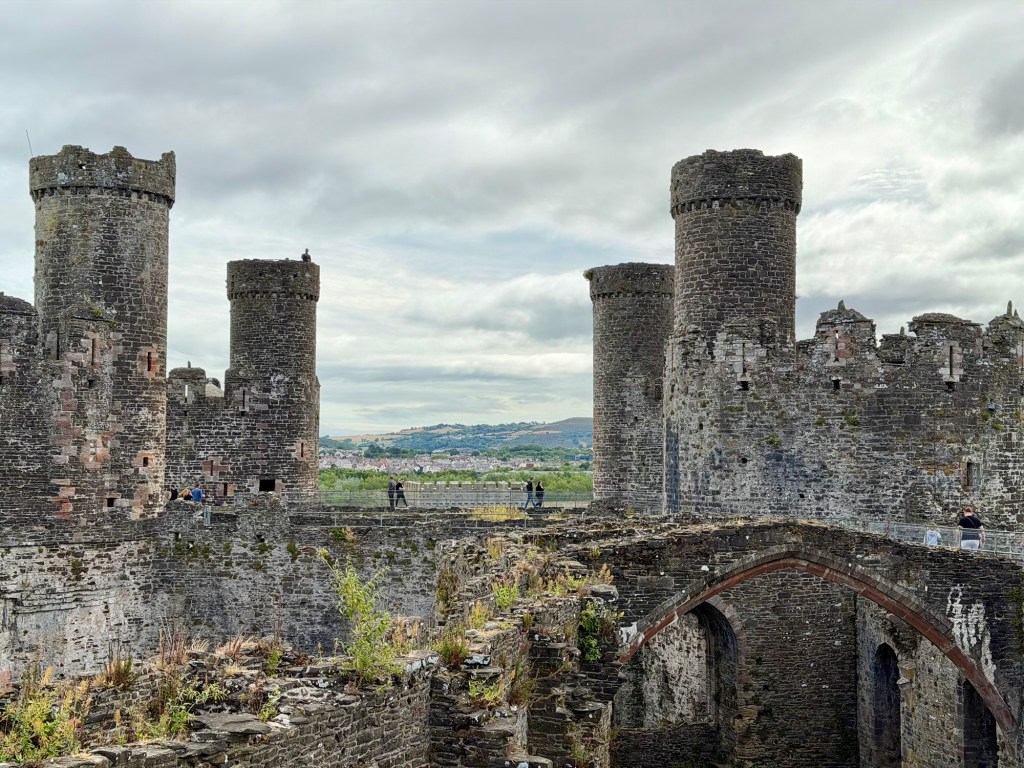
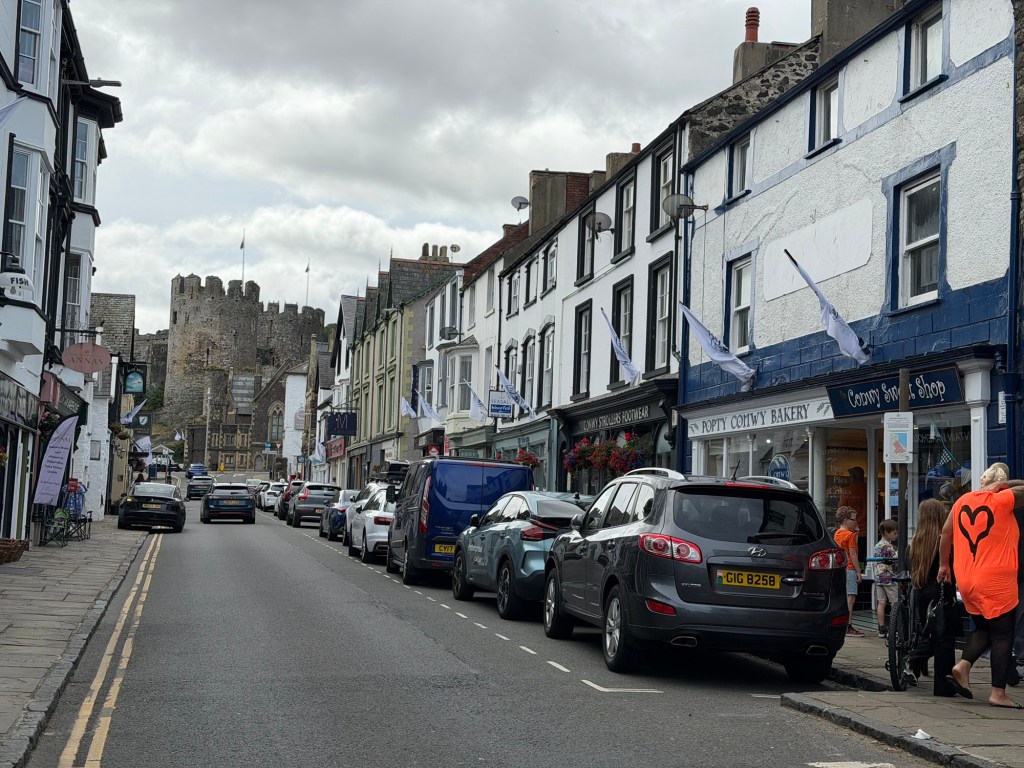
After about a two hour drive, we arrived in Conwy, a picturesque medieval walled town on the north coast of Wales, best known for its remarkably well preserved castle and historic harbor.
Our first stop in the town was Conwy Castle, a spectacular 13th century fortress built by King Edward I as part of his conquest of Wales. Its massive stone towers and intact walls make it one of the finest examples of medieval military architecture in Europe and a UNESCO World Heritage Site.
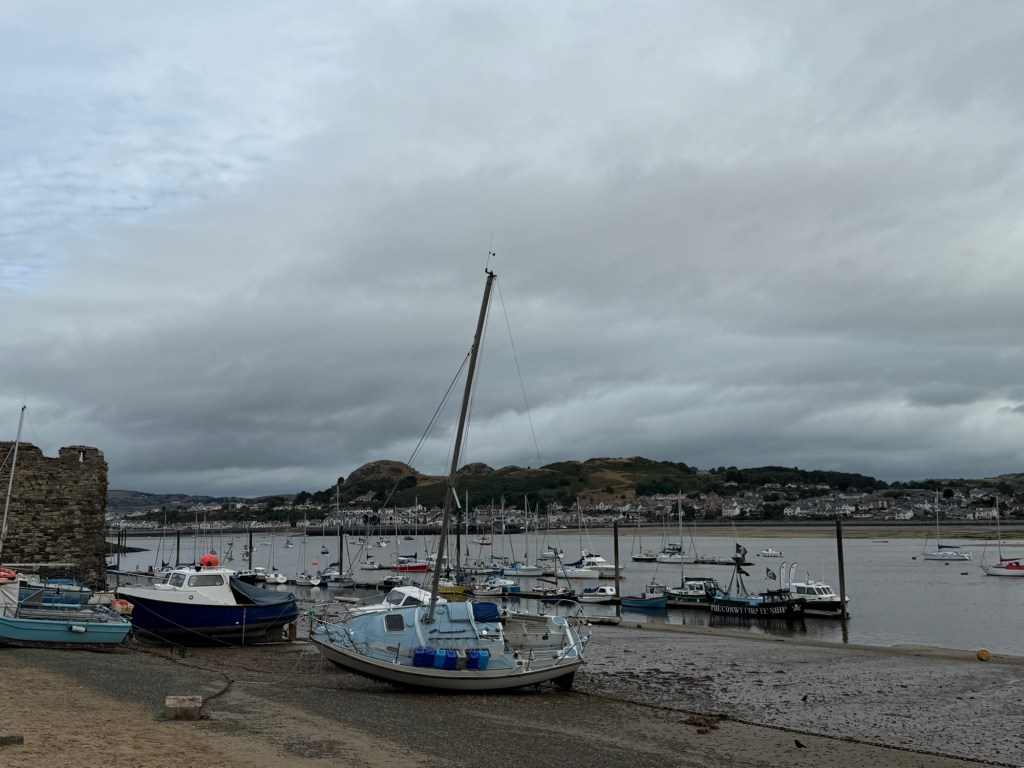
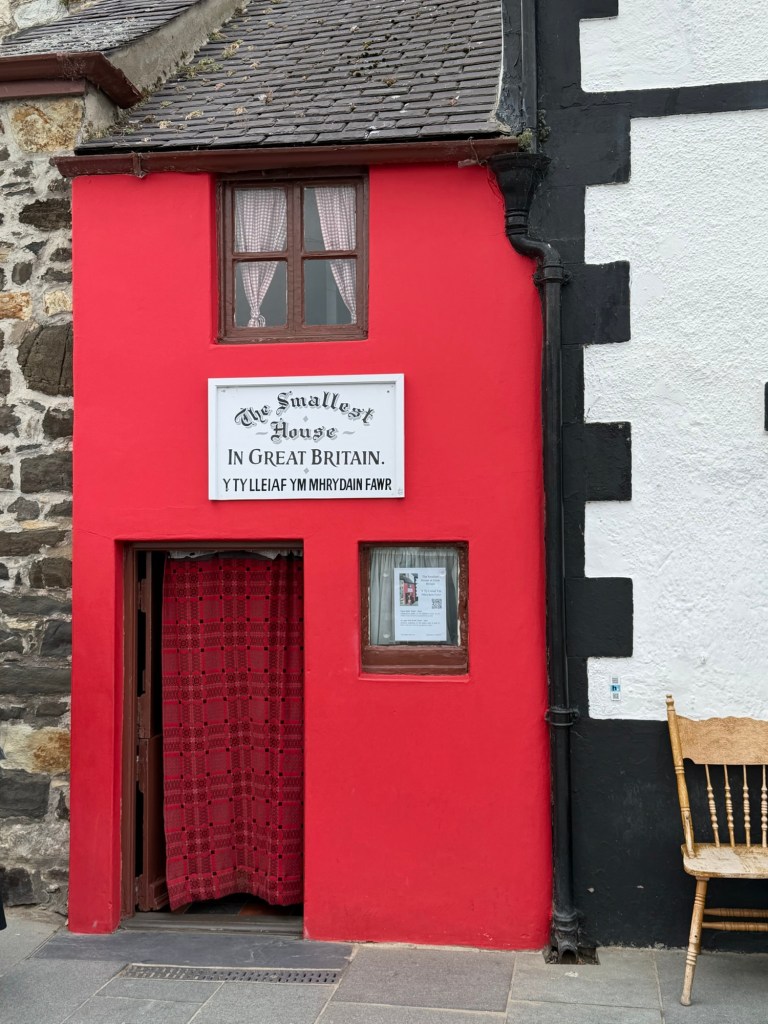
After exploring the castle, we wandered through the town’s narrow streets and down to Conwy Quay, where colorful boats sit beneath the castle walls. The tide was really far out that day so many of the boats were sitting on the river bed. We also visited The Smallest House in Great Britain, a tiny red home measuring just 72 inches wide and 122 inches tall that was lived in until 1900.
With time before our tour resumed, we relaxed at the Liverpool Arms Pub before grabbing a quick lunch of fresh crab rolls and heading back to the bus.
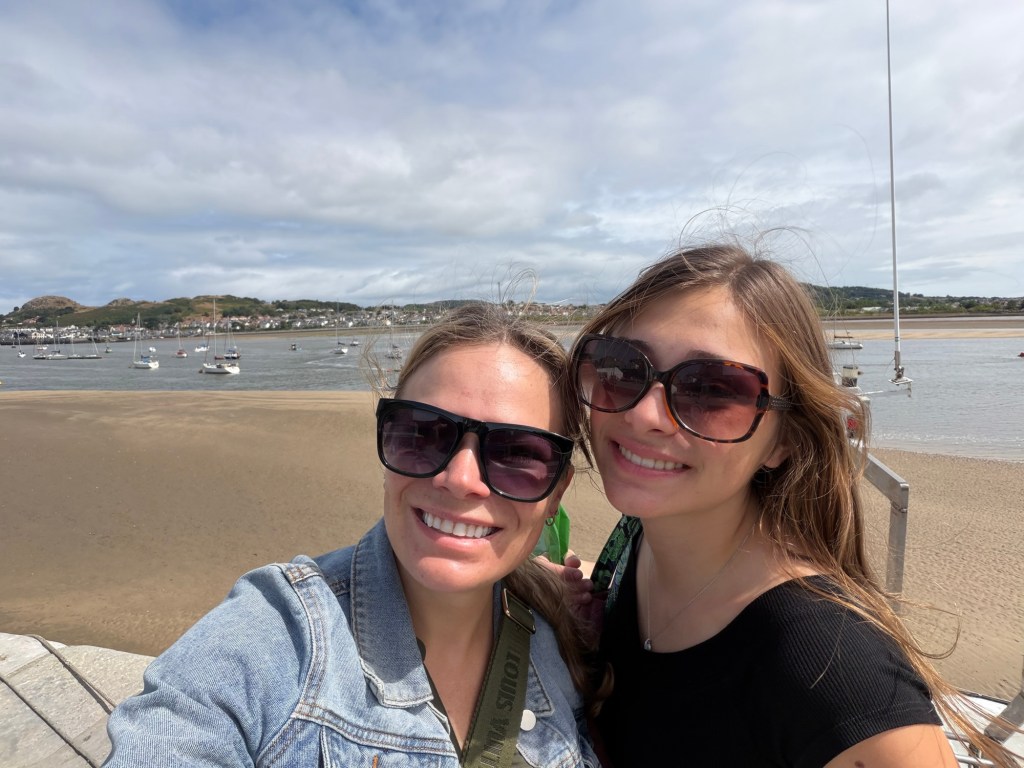
From there, we continued along the scenic North Wales Coastal Road with views of Puffin Island and the Isle of Anglesey before turning inland into Snowdonia National Park. The landscape quickly shifted into a dramatic mix of mountains, lakes, and valleys, with Yr Wyddfa (Snowdon), the highest peak in Wales, at its center.
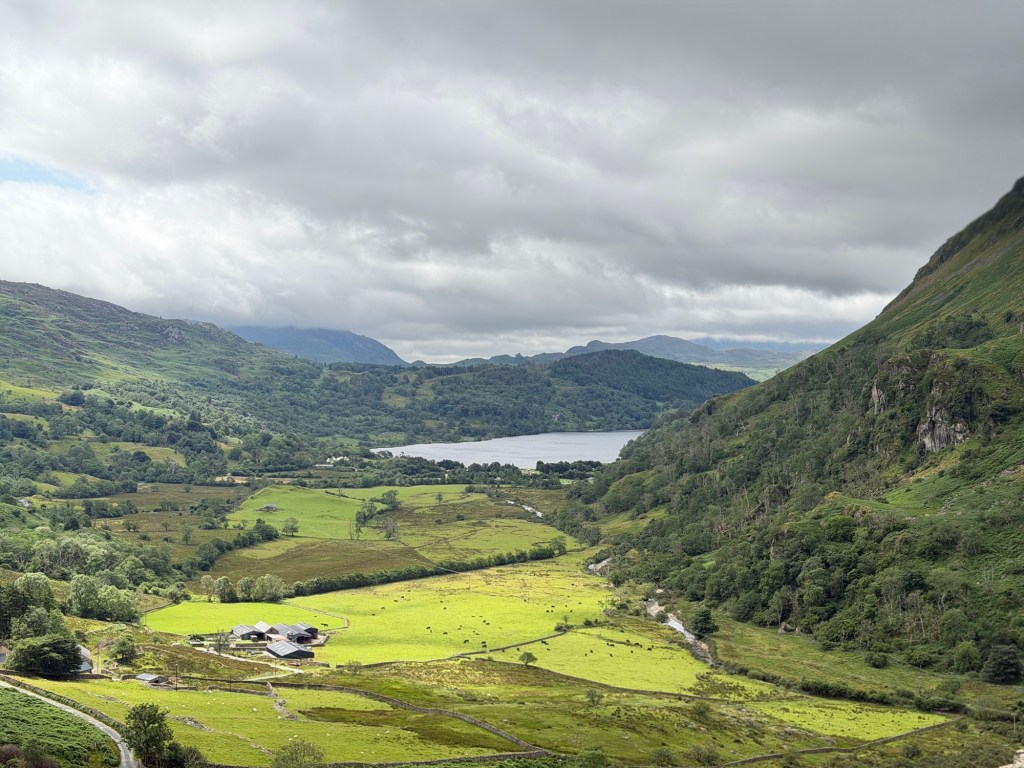
We stopped at Llyn Ogwen to see the Llafn y Cewri sculpture and take photos with the mountains as a backdrop. The sculpture is a giant sword resembling Excalibur. According to Arthurian legend, Excalibur was thrown into a lake in Snowdonia after King Arthur’s final battle, and some locals believe this may have been the one, which led to the installation of this striking twenty foot sword in the stone monument.
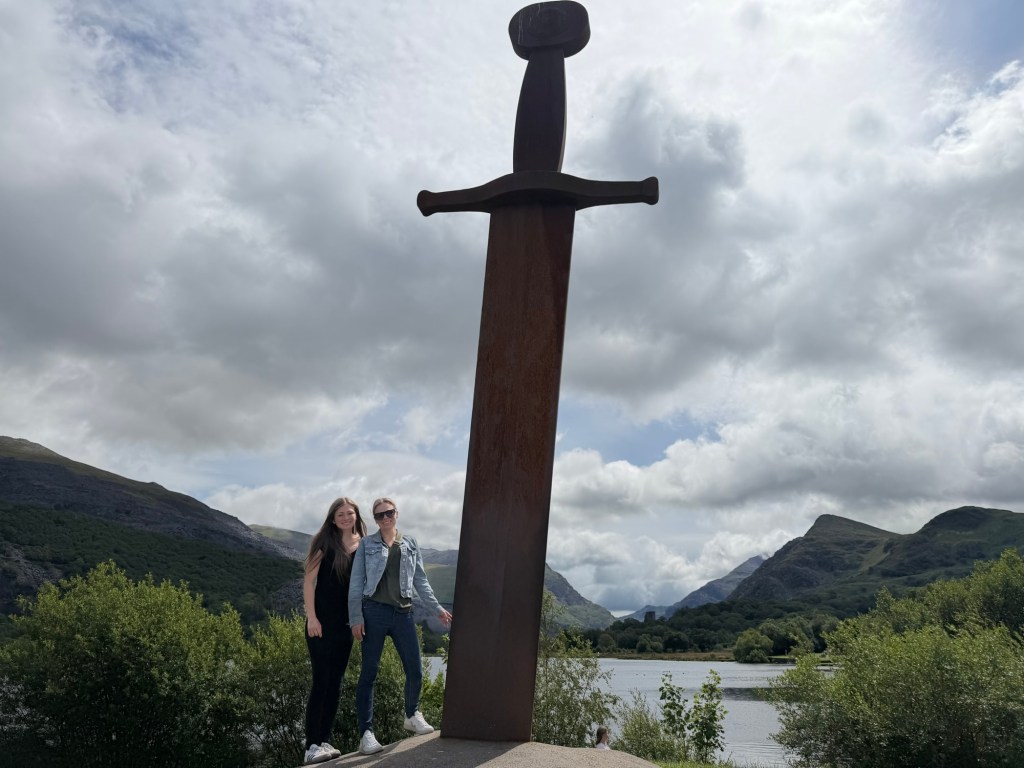
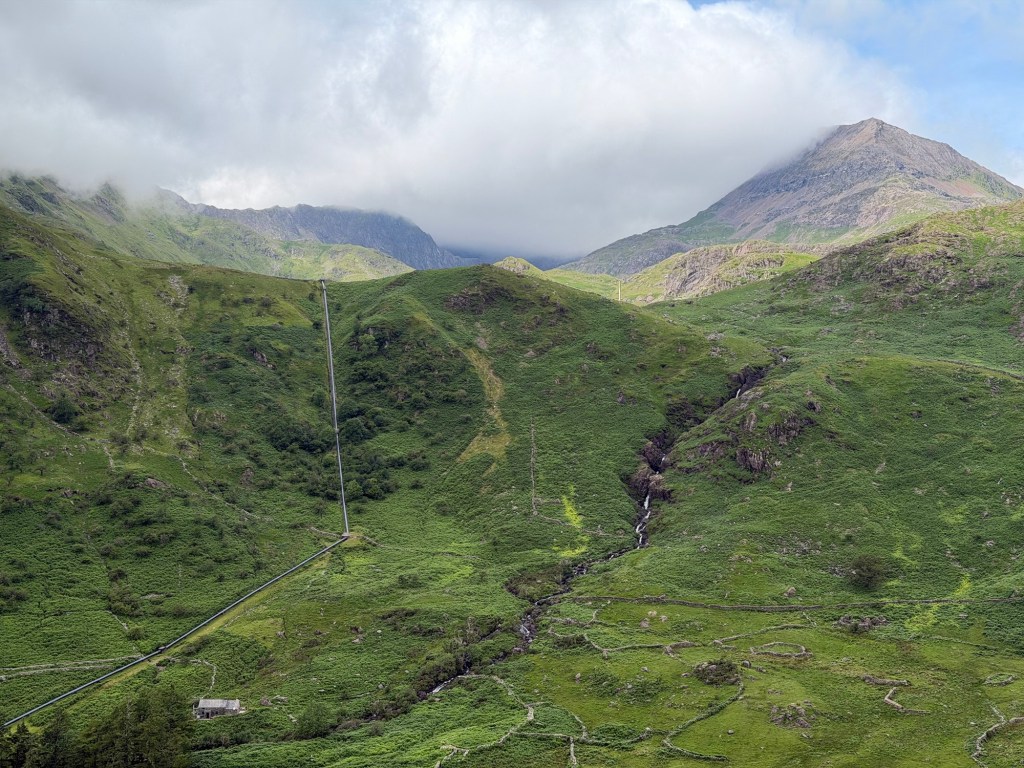
From there, we continued through increasingly rugged terrain as the clouds slowly lifted and hikers began to fill the trails. From Pen y Pass, we were treated to sweeping views of the surrounding peaks before reaching a final viewpoint overlooking Mount Snowdon and the dramatic ridge of Crib Goch.
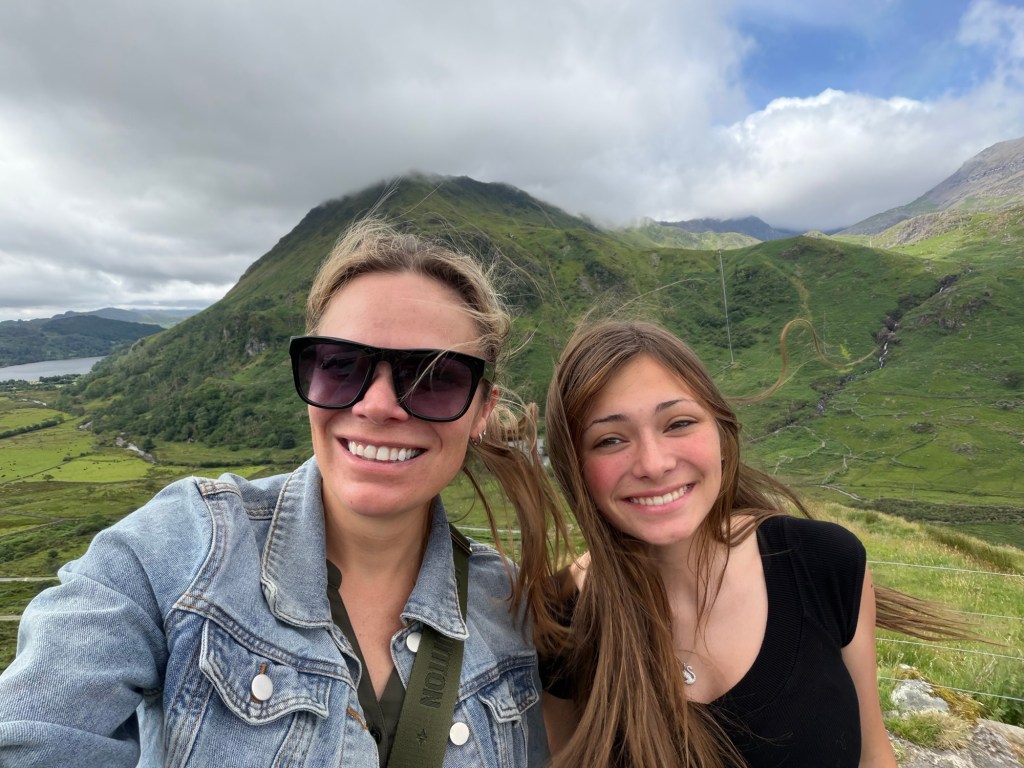
Even without a clear summit view, the scenery was breathtaking, especially looking down toward Llyn Gwynant far below. The entire region felt wild and expansive in a way that is hard to capture in photos.
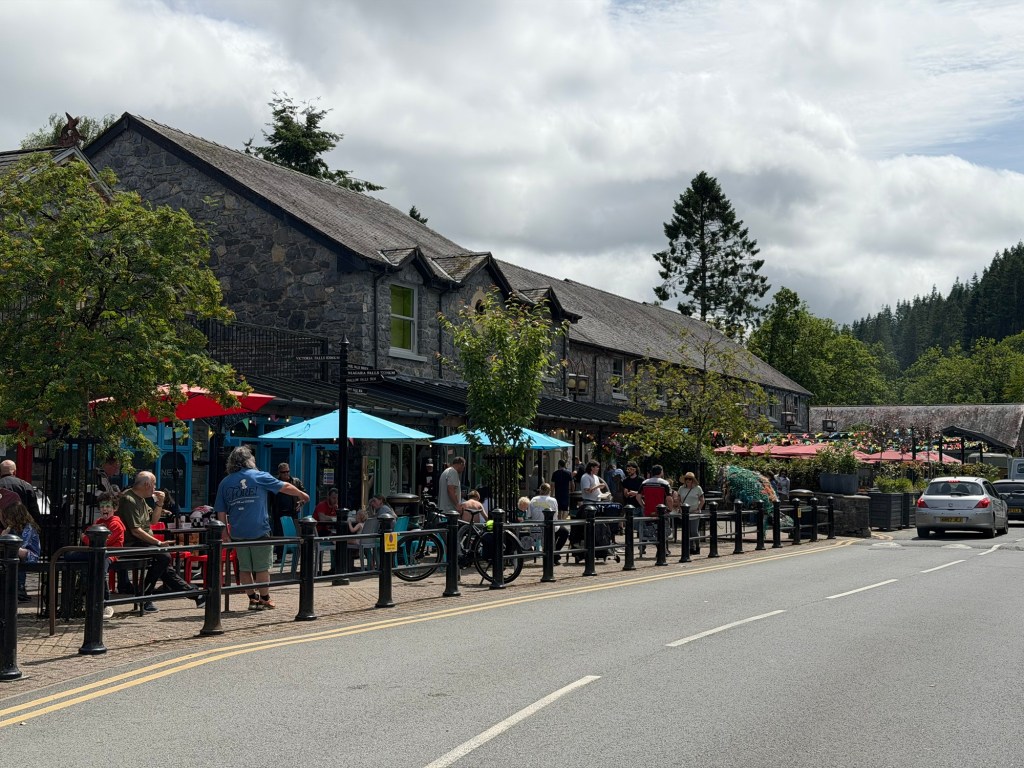
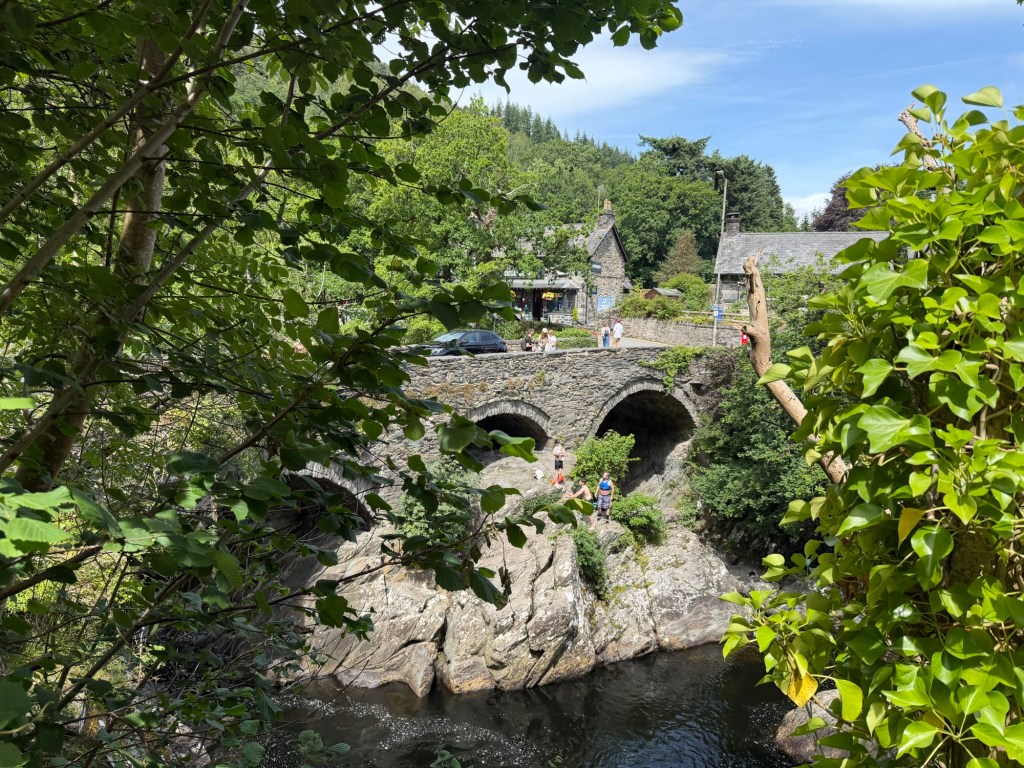
From there, the road descended into forested valleys as Darrin kept up a steady stream of stories about Welsh legends and local history. Our next stop was Betws y Coed, a charming village surrounded by woodland and rivers that served as a perfect place to stretch our legs and grab lunch.
We then continued the drive to Chester, where we unfortunately fell asleep after a long day of travel and missed most of Darrin’s commentary. We picked up a few tidbits about Roman ruins and a beautiful cathedral as we woke up a few minutes outside of town.
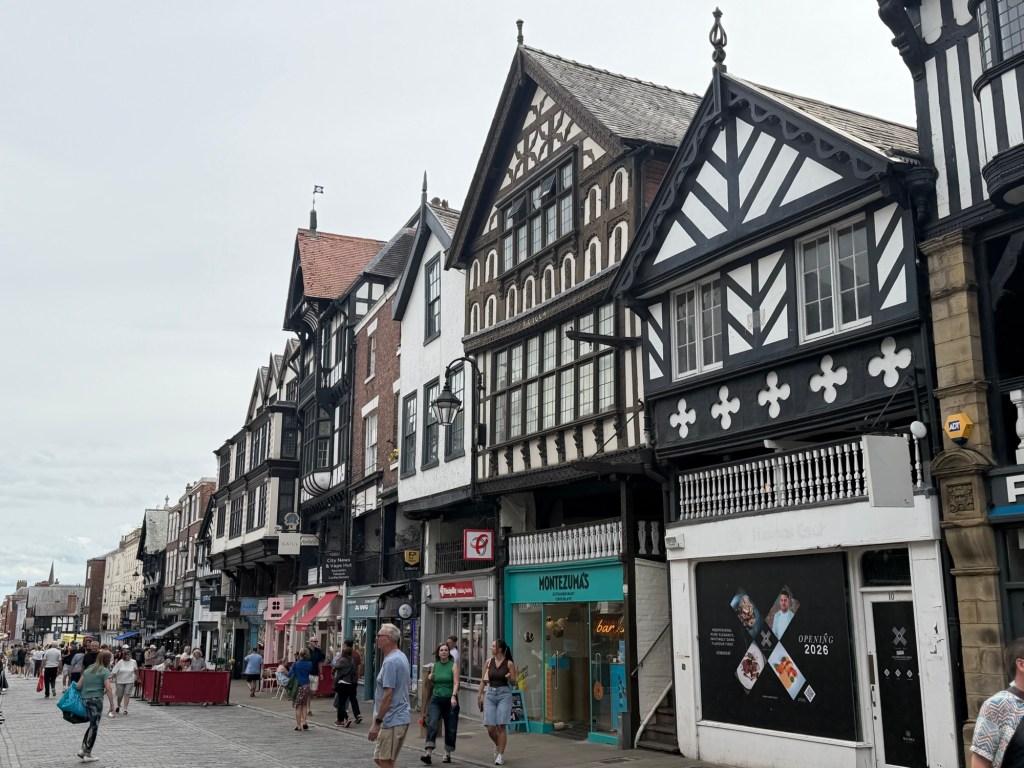
When we arrived, we discovered a compact, historic city filled with Roman remains, medieval architecture, and a lively pedestrian center. Highlights included Chester Cathedral, where we caught an organ rehearsal, a walk along the city walls, and a visit to the Roman amphitheater.
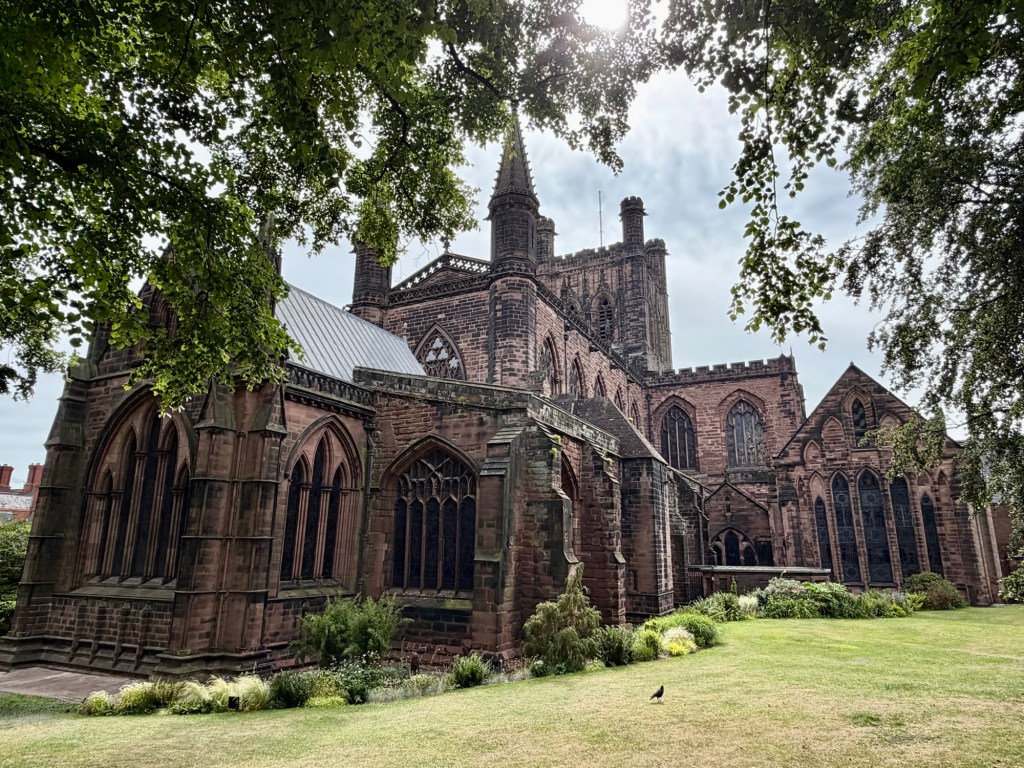
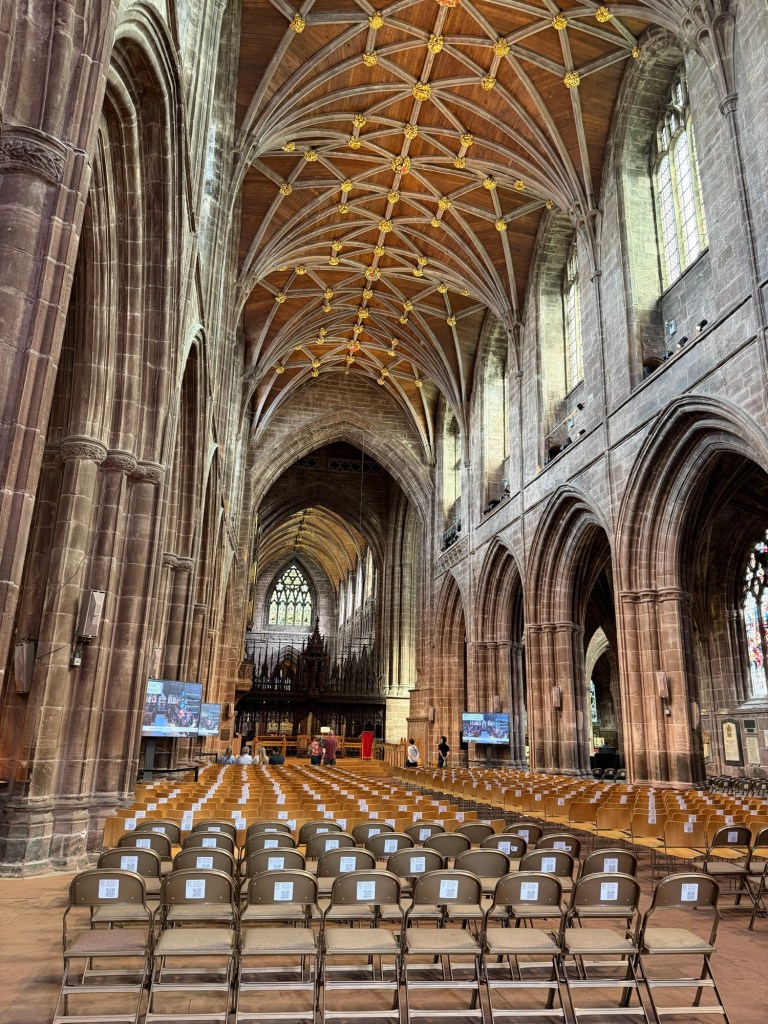
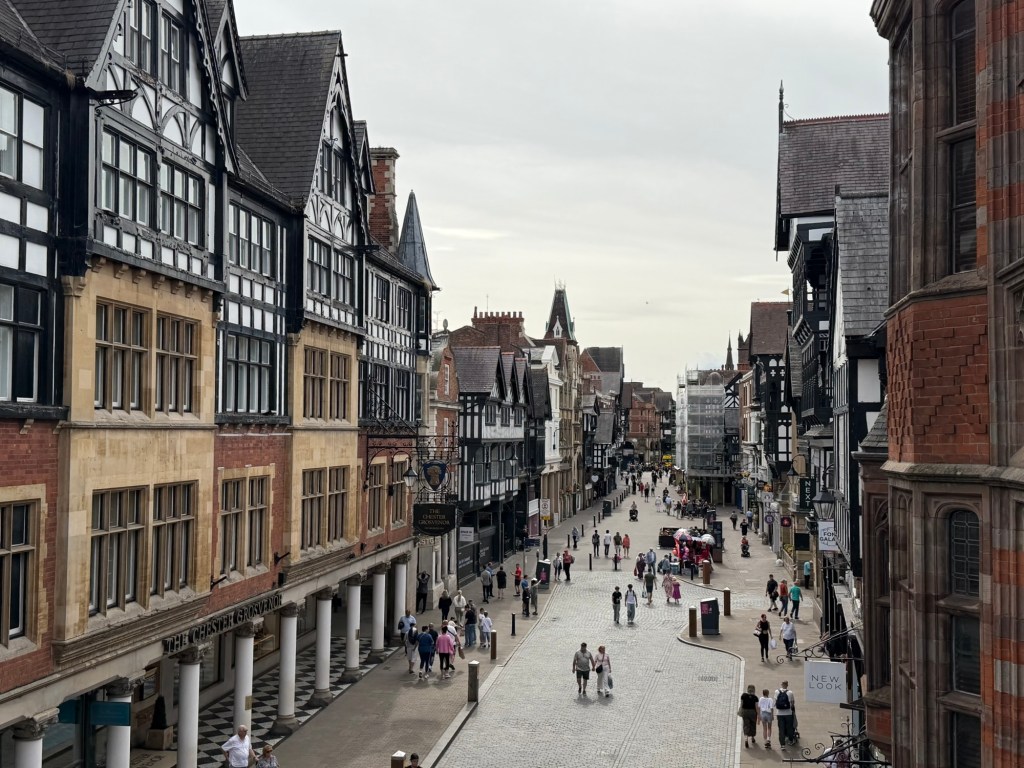
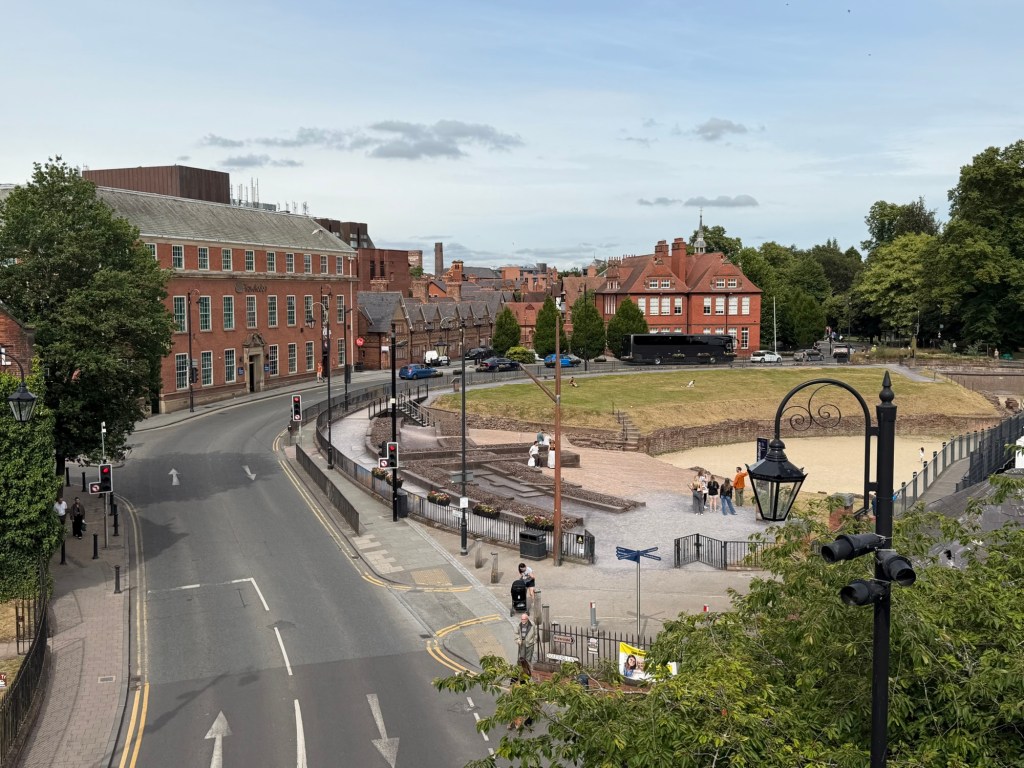
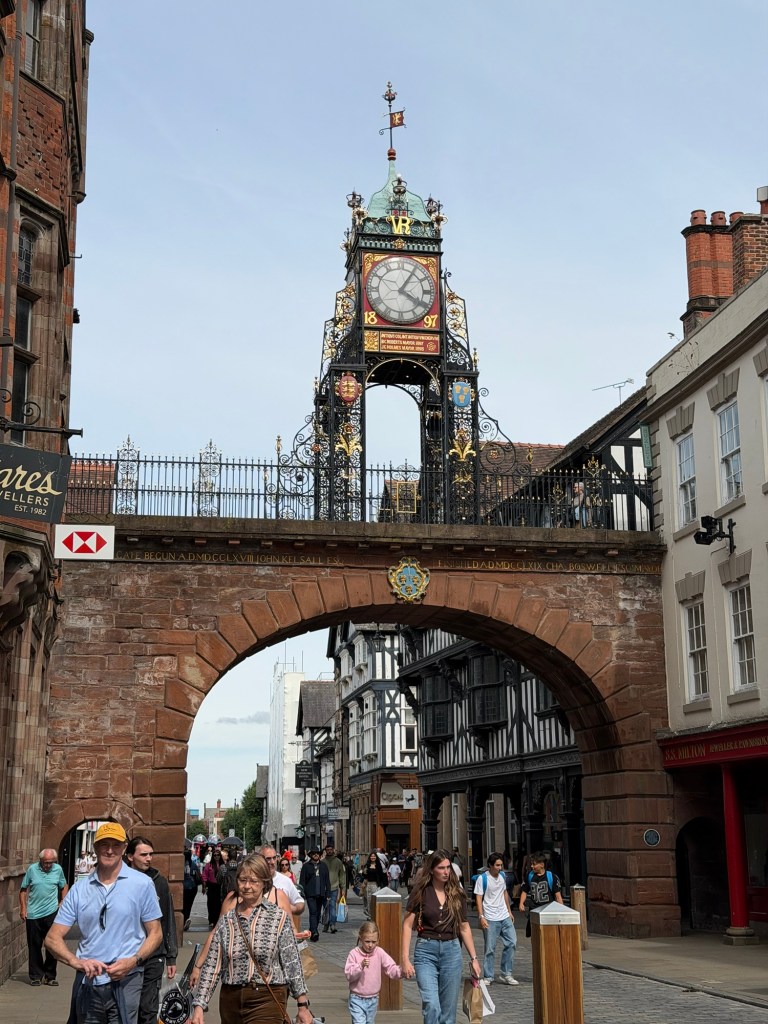
Chester was one of those places that felt like it deserved much more time, with the River Dee, boat trips, and Chester Racecourse all nearby. It is definitely somewhere I would return to for a full weekend.
We arrived back in Manchester after 7 p.m., exhausted but happy. We had a quiet dinner back at the hotel and then watched some of the Brazil vs Norway game. We were so tired though, we didn’t make it to the end. We were woken up around 2:30am to loud cheers from the streets outside. England was playing against Mexico in the World Cup and making a comeback from behind in the final minutes of the game. I was a little sad to not be among them, experiencing the energy but only felt that for a few minutes before rolling back over into sleep.
Another pleasant surprise from the trip was Manchester. I had expected a fairly industrial city, but instead found a place that felt modern, energetic, and very much in the middle of transformation. The skyline is filled with new high rise buildings and ongoing development, and according to our guide Darrin, more than 50 additional skyscrapers are planned. He also noted that Manchester has become one of the most heavily invested urban centers in Europe, attracting major international companies and regional headquarters.
Unlike Liverpool’s historic, musical character, Manchester felt more like a fast growing business and lifestyle hub. The city had a distinctly young population, with rooftop bars, beer gardens, and a lively nightlife scene. Despite its rapid growth, it still felt clean, organized, and easy to navigate, with a strong sense of modern urban livability. I will definitely be back!
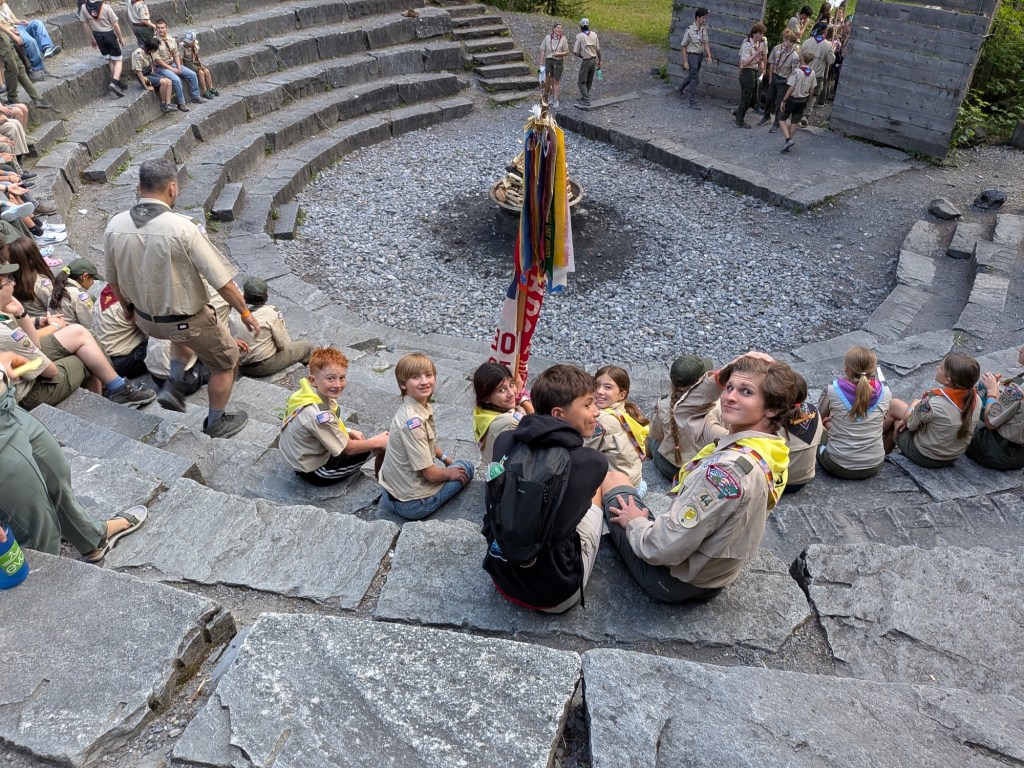
The next morning we were up early for our flight back to Stuttgart, arriving home by midday. It was an unusually quiet house though because over the weekend, Ryan left for a Boy Scouts trip in Switzerland. We missed him, and will continue to miss his next week, but know he was having an amazing time!